2026 Best EEG Equipment for Hospitals and Clinics?

Choosing the best Eeg Equipment for a hospital or clinic is not simply a matter of comparing prices or channel counts. In 2026, teams must consider how reliably a system records brain activity, fits daily workflows, and supports the patients they serve. A busy neurology department may need a fixed acquisition room, while a smaller clinic may value a portable system that is quick to prepare. The right choice depends on real clinical needs.

Small details matter. Electrode setup time, cap comfort, amplifier performance, and clear software controls can affect each recording. So can practical features such as video synchronization, review tools, data export, and compatibility with existing clinical systems. A specification sheet may look impressive, yet still leave important questions unanswered. Ask how the system performs during a routine recording, not only in a demonstration.

This guide compares equipment categories and selection criteria for hospitals and clinics. It considers recording quality, usability, service support, training, and the requirements of different patient groups. Procurement teams should also confirm current regional approvals, cybersecurity practices, and vendor support before making a decision. Involve clinicians and clinical engineering staff. Their experience can reveal workflow problems that brochures miss. No device is perfect. Even a careful comparison can overlook something, so test the equipment with representative users and realistic cases where possible.
2026 Best EEG Equipment for Hospitals and Clinics?

What EEG Equipment Does in Hospitals and Clinics

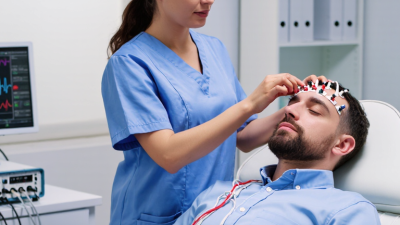
In hospitals and clinics, EEG equipment records the brain’s electrical activity through small electrodes placed on the scalp. Clinicians use these recordings to investigate seizures, altered awareness, sleep problems, and other neurological concerns. The equipment does not diagnose a condition by itself; trained professionals interpret the signals alongside symptoms and other test results.

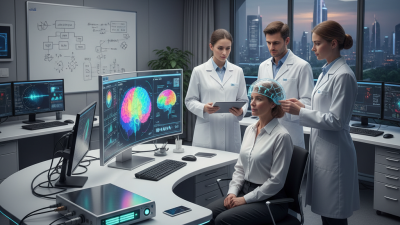
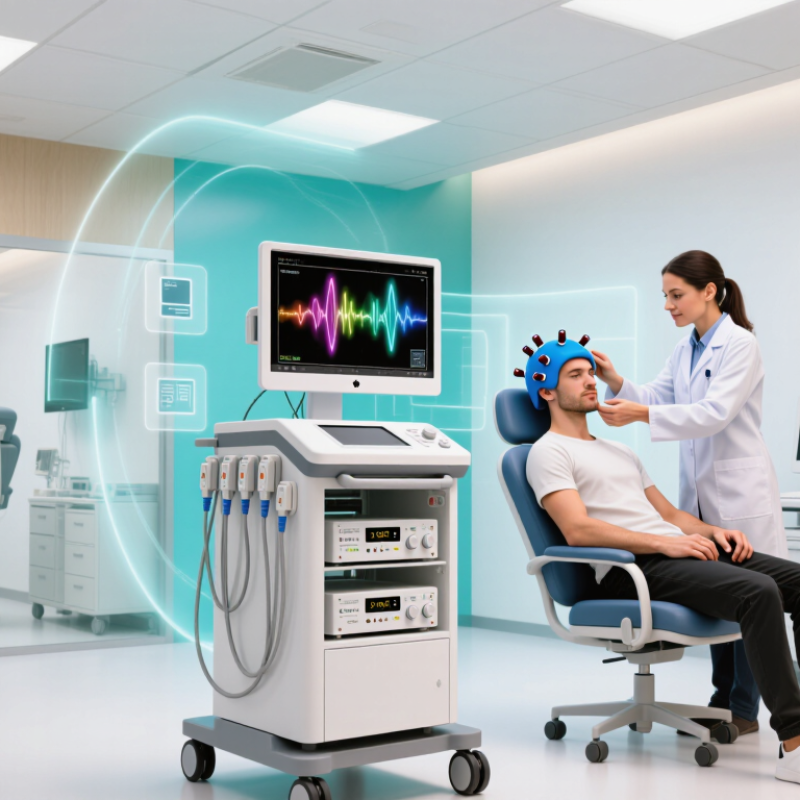
A typical setup includes an amplifier, electrode leads, recording software, and a screen for reviewing waveforms. During a routine study, a patient may sit or lie in a quiet room while a technician checks electrode contact and watches for movement or electrical interference. Small details matter. A loose lead, blinking, or a nearby device can create artifacts that resemble meaningful activity. Video may be added when observing behavior alongside brain signals is clinically useful.

Hospitals often need systems suited to longer monitoring and integration with established clinical workflows. Smaller clinics may value a clear interface, straightforward setup, and reliable support. In either setting, staff training, routine equipment checks, and secure handling of patient data are essential. Specifications alone can be misleading. A technically capable system may still frustrate a team if its workflow is poorly matched to the room, staffing, or patient population. That trade-off deserves careful review.

Common EEG System Types and Their Clinical Uses

2026 Best EEG Equipment for Hospitals and Clinics?
Common EEG System Types and Their Clinical Uses

Routine EEG systems capture brief recordings of brain activity, often during a clinic visit. They support evaluations of suspected seizures and other neurological symptoms. Technologists place electrodes across the scalp, check signal quality, and note patient behavior during the recording. Small setup details matter. Poor electrode contact or movement can introduce artifacts that complicate interpretation.

Video EEG combines brain recordings with synchronized video. Clinicians may use it to assess episodes that are difficult to characterize from a brief test, including seizure-like events. Ambulatory EEG lets patients wear a recorder at home, sometimes for several days, while they follow ordinary routines. Sleep EEG focuses on brain activity during sleep or drowsiness. Patient comfort matters.

In intensive care, continuous EEG monitoring can help clinicians track brain activity over extended periods, especially when patients cannot describe symptoms. Portable systems may also suit bedside use or clinics with limited space. Still, longer recordings do not automatically mean clearer answers. Staff availability, camera placement, electrode maintenance, and review time all affect practical value. That part is easy to underestimate.

Key Features to Compare in 2026

Key Features to Compare in 2026

Choosing EEG equipment for a hospital or clinic starts with the work it must support. Compare channel count, expandable configurations, and recording duration against your typical patient mix. Higher channel counts are not automatically better if staff rarely use them. Small details matter. Check whether the system captures clear signals in rooms with nearby electrical equipment, and whether impedance checks are easy to interpret.

Review the full workflow, not just the amplifier. Can staff create or adjust montages efficiently, mark events during recording, and synchronize EEG with video when clinically needed? Look for straightforward patient setup, comfortable electrodes, and surfaces that can be cleaned according to facility procedures. A clear display helps during busy shifts. Still, a polished interface cannot compensate for confusing menus or unreliable connections, so hands-on testing is worth the time.

Consider data export, compatibility with existing records, access controls, software updates, and local technical support. Ask how training is delivered and how quickly common service issues are handled. Portability may matter in smaller clinics or bedside assessments, while larger departments may prioritize shared workflows and storage. No checklist catches everything. Trial the equipment with real staff and representative cases, then note where setup slows down; those observations can expose practical gaps that a specification sheet misses.

How to Choose Equipment for Different Clinical Settings

Hospitals and clinics need EEG equipment that fits their actual workflow, not just a long feature list. A busy neurology department may need multiple channels, reliable video synchronization, and easy access to recordings. A smaller clinic may value a compact system that moves between rooms and sets up quickly. Consider who will operate it, how often it will be used, and whether staff can review signals without unnecessary steps. Small details matter.

Tips: Test the system in the room where it will be used. Check electrode setup time, display visibility, cleaning requirements, and how recordings are exported. Ask staff who use EEG daily to join the evaluation. Their feedback can reveal overlooked issues.

Also consider patient comfort, service availability, training, and compatibility with existing clinical workflows. Confirm that the system supports the recording protocols your qualified team routinely uses. A demonstration with a realistic case is more useful than a polished presentation. No setup is perfect. Even careful planning may miss a workflow snag, so gather feedback after installation and revisit the choice as clinical needs change.

2026 Best EEG Equipment for Hospitals and Clinics? – How to Choose Equipment for Different Clinical Settings

Clinical setting Suitable EEG system Typical recording setup Key equipment features What to check before purchase
Outpatient neurology clinic Routine digital EEG system Standard scalp montage using the international 10–20 electrode placement system; routine studies commonly include activation procedures such as hyperventilation or photic stimulation when clinically appropriate. Clear waveform display, synchronized event marking, configurable montages, video option, and efficient review and export tools. Confirm support for the clinic’s required electrode coverage, safe photic stimulation, local reporting workflow, data export, and staff training.
Hospital EEG laboratory Full-featured clinical EEG with video capability Routine and extended studies, with electrode coverage selected for the referral question; additional electrodes may be used when clinically indicated. Synchronized video and EEG, flexible montage editing, event annotation, remote review, and secure archiving. Assess video quality, storage requirements, network integration, user permissions, cybersecurity, and compatibility with existing clinical systems.
Intensive care unit Continuous EEG monitoring system Continuous recordings with scalp EEG channels and appropriate auxiliary signals; electrode coverage and duration should follow the clinical indication and local protocol. Long-duration recording, synchronized bedside video where feasible, signal-quality indicators, event marking, and review tools for remote interpretation. Check uninterrupted recording, power and network resilience, alarm configuration, electrode maintenance workflow, data retention, and round-the-clock technical support.
Ambulatory EEG service Wearable ambulatory EEG recorder Out-of-hospital recording, often lasting one or more days according to the clinical plan; electrode count and auxiliary channels vary by system and study purpose. Portable recorder, patient event marker, adequate battery and storage capacity, and a practical method for reviewing recording quality. Verify recording duration under the intended channel configuration, patient comfort, electrode and cable durability, data security, and instructions for patients and caregivers.
Small clinic or satellite site Portable EEG system with remote review options Routine diagnostic recordings using standard electrode placement, with a configuration suited to the clinic’s common referrals. Compact setup, straightforward electrode application, local data capture, and secure transfer for interpretation when specialist review is off-site. Consider staff competency, connectivity, offline operation, technical support response times, and the total cost of electrodes, consumables, software, and service.
Sleep and epilepsy evaluation service EEG system configured for the intended study protocol EEG combined with relevant synchronized signals when required by the study, such as electro-oculography, chin electromyography, electrocardiography, or video. Flexible auxiliary inputs, synchronized signal display, configurable recording profiles, and review tools appropriate to the service. Confirm that the system supports the specific clinical protocol; EEG alone is not a substitute for a complete polysomnography setup when one is indicated.

Selection note: Channel counts, recording duration, electrode coverage, and required accessories depend on the clinical indication, local protocols, and system configuration. Confirm applicable medical-device requirements, data-protection obligations, and service support in your jurisdiction before purchase.

EEG System Setup, Workflow, and Maintenance

A dependable EEG system begins with a repeatable room setup. Keep the amplifier, electrode leads, and patient chair in fixed positions; label cables clearly and check connectors before each session. The American Clinical Neurophysiology Society’s 2016 guideline sets 20 minutes as the minimum recording time for a routine EEG, excluding setup. Treat that as a baseline, not a guarantee of useful data. Follow the international 10–20 electrode-placement system described in IFCN technical standards, and document electrode problems rather than quietly accepting noisy channels. Small details matter: a loose cup electrode can turn a calm recording into a long troubleshooting session.

Workflow should leave time for skin preparation, impedance checks, patient instructions, and a brief review of signal quality before the patient leaves. Keep a dated log for equipment inspections, repairs, software changes, and recurring artifacts. Verify cables and electrodes regularly, and follow the facility’s electrical-safety and manufacturer maintenance procedures. A cable map can feel tedious. It helps. Staff turnover, rushed rooms, and inconsistent cleaning can still undermine a polished protocol; that deserves honest review. Track setup delays and repeat recordings, then use those records to identify where training or maintenance is falling short. Sources: ACNS Guideline 1, 2016; IFCN technical standards for routine EEG.

Close

Raise your Query

Hi! Simply click below and type your query.

Our experts will reply you very soon.

WhatsApp Us