Why Choose Automatic Diaper Machines for Your Business?

Choosing an Automatic Diaper machine is a major production decision, not simply a choice between faster and slower equipment. The right line can coordinate forming, absorbent-core placement, sealing, cutting, and inspection. Each step affects output and product consistency. Small details matter.

The United Nations’ World Population Prospects 2022 reported that the global population reached eight billion in November 2022. That figure is not a diaper-sales forecast, but it helps explain why manufacturers study dependable, scalable production. Smithers’ industry research on global nonwovens also examines materials used in disposable hygiene products, including diapers. Buyers should connect such market research with their own order volumes, material specifications, staffing, and maintenance capacity. A large market does not guarantee a good investment.

Manufacturing engineer Shigeo Shingo wrote, “The most dangerous kind of waste is the waste we do not recognize.” His principle applies to hidden losses: frequent changeovers, rejected products, excess trim, or unplanned stops. Before selecting a machine, ask suppliers for verified production data, product-changeover times, and service details. Request a demonstration using your actual materials. Then check whether the quoted speed holds under realistic operating conditions. It may not. That gap deserves scrutiny, not a sales promise. This introduction explores why businesses choose automatic diaper machinery—and what they should examine before committing capital.
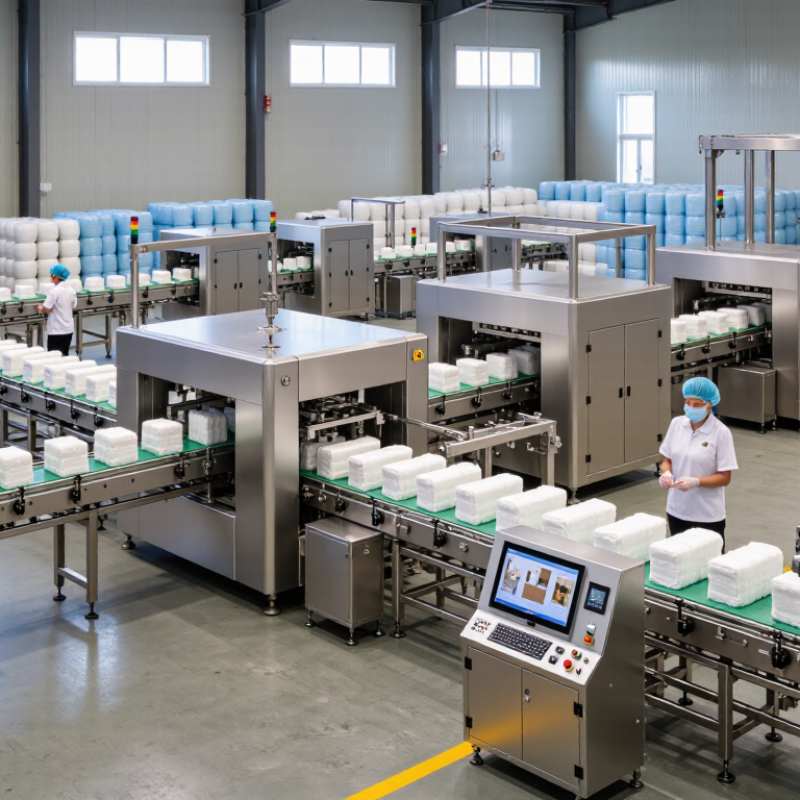
Why Choose Automatic Diaper Machines for Your Business?

What Automatic Diaper Machines Are and How They Work

An automatic diaper machine is an integrated production line that turns rolls and absorbent materials into finished diapers. It may handle nonwoven topsheets, backsheet film, elastic strands, pulp, and superabsorbent polymer. At the core-forming station, measured pulp and polymer are shaped into an absorbent pad. The machine places this pad between material layers, bonds the edges, and adds leg cuffs and fastening tabs. Small sensors monitor web alignment, tension, and product position. A control system coordinates motors, cutters, and alarms. Not magic.

As materials unwind, rollers guide each layer through forming, bonding, elastic placement, folding, and cutting stations. Servo drives adjust timing so components meet in the correct positions. Inspection systems may detect missing parts or weak seals, depending on the machine’s configuration. Accepted diapers are counted and sent to packaging; rejected units can be removed automatically. Operators still matter. Changeovers, material quality, and calibration affect waste and consistency. A fast line can still produce flaws if settings drift. In practice, diagrams rarely show every stoppage; actual output depends on material behavior and careful checks. Automatic does not mean maintenance-free.

Why Choose Automatic Diaper Machines? How They Work

Automatic diaper machines combine material handling, product assembly, cutting, and inspection in a continuous production line.

Bars show process order, not production time or output. The exact sequence can vary by diaper design and machine configuration.

Key Production Stages in an Automatic Diaper Manufacturing Line

An automatic diaper line turns separate materials into a finished product through a sequence of controlled production stages. The process often begins with fluff pulp and absorbent polymer entering a core-forming unit. Metering systems distribute these materials across a moving web. Operators check the core’s shape and absorbency, since uneven placement can affect comfort and leakage control. Small details matter.

Next, the core is combined with a topsheet, backsheet, and other layers. Adhesive bonds the materials, while elastic strands form leg cuffs and waist features. A cutting station shapes each diaper, and folding equipment prepares units for counting and packaging. Sensors can flag misaligned layers or missing components, but they do not replace routine inspection. Settings vary with diaper size and design.

At the end of the line, workers review samples for dimensions, seals, and visible defects. Packaging equipment groups products into bags or cases for handling and shipment. A well-configured line can reduce repetitive manual work and support consistent output, though actual performance depends on material quality, maintenance, and operator training. Fast is not always better. Excessive speed may increase waste or conceal recurring faults, so production records and careful adjustment remain important.

Business Benefits of Automating Diaper Production

Automatic diaper machines can make production more consistent by coordinating material feeding, core forming, folding, and cutting. When settings are stable, operators can reduce repetitive handling and keep product dimensions more consistent across a shift. That matters when absorbent cores, elastic strands, and outer sheets must align. A steady line can also help managers plan output and labor more clearly. It is not an instant fix. Product changes, uneven material quality, or unplanned stops can still disrupt production.

Tips: Track scrap, stoppages, and changeover time for several weeks before judging performance. Train operators to inspect seals, cut edges, and sensor alerts. Keep common wear parts near the line. Small checks matter.

Automation can also provide useful production data, helping teams spot recurring slowdowns and schedule maintenance before minor faults grow. But the data is only useful when someone reviews it and responds. A machine may expose weak planning rather than solve it. There is a trade-off, too: installation, training, and maintenance require time and budget. Compare expected output with your current process, and consider product variety, available floor space, and operator experience. Human oversight still matters, especially during setup and quality checks.

Factors That Affect Machine Capacity and Product Quality

Automatic diaper machines should be judged by usable output, not headline speed. Grand View Research estimated the global baby diaper market at USD 83.2 billion in 2023 and projected 5.4% annual growth through 2030. That demand makes capacity important, but a fast line cannot compensate for frequent stops, changeovers, or rejected products. Ask suppliers for sustained output under your planned product mix, not just peak speed.

Capacity and quality depend on several linked factors: web tension, material consistency, glue application, cutting accuracy, and operator skill. A small shift in tension can wrinkle the topsheet; uneven adhesive can weaken the core. Check performance using trial runs with your actual materials. Track good units per minute, scrap rate, and downtime across several shifts. ISO 2859-1 provides sampling procedures for inspection, though sampling alone cannot replace in-process checks. One caveat: results from a short factory test may not reflect daily production.

Tips: Request a logged acceptance test. Inspect absorbency, dimensions, seals, and adhesive placement on samples from different points in the run. Record changeover time too. A machine that runs quickly but needs constant adjustment may deliver less than expected.

How to Evaluate an Automatic Diaper Machine for Your Business

Automatic diaper machines can raise output, but capacity alone is a poor buying measure. Start with your actual product mix: size range, absorbent-core design, fastening style, and expected daily volume. Ask the supplier to demonstrate a changeover using the materials you plan to run. A machine that performs well with one sample may need adjustment with another. Watch the line closely.

Check the forming, cutting, folding, and packing stages as one connected process. Record stable output, reject rate, and downtime during a sustained trial, not just a brief demonstration. Request utility figures, operator requirements, spare-parts lead times, and maintenance intervals in writing. Inspect access to sensors, blades, and web paths; awkward access can turn a small jam into a long stoppage. Small details matter. Compare total cost per acceptable diaper, not just purchase price, while recognizing that forecasts are never exact.

Tips: Bring your own nonwoven fabric, film, and core materials for testing. Ask operators to clear a simulated jam and complete a product changeover. Then test it. Keep trial results, assumptions, and unresolved questions in a shared evaluation sheet before deciding.

Why Choose Automatic Diaper Machines for Your Business? - How to Evaluate an Automatic Diaper Machine for Your Business
Evaluation Dimension What to Compare Example Value or Calculation Why It Matters
Rated production speed Ask for the rated output for each diaper size and product specification, and clarify whether the figure is a theoretical maximum or a demonstrated rate. Example planning input: 400 diapers per minute. This is an illustrative value, not a universal machine benchmark. A clear, comparable speed specification helps estimate production capacity and prevents comparisons based only on headline figures.
Annual saleable output Calculate output using operating hours, production days, uptime, and quality yield. 400 diapers/min × 60 min/hour × 16 hours/day × 300 days/year × 75% operating efficiency × 98% quality yield = 83,980,800 saleable diapers/year (approximately). This estimate is more useful for demand planning than rated speed alone. Replace the example assumptions with verified production-trial and factory data.
Product and size flexibility Confirm which diaper styles, size ranges, materials, and packaging formats the line can handle, and identify any required additional tooling. Example evaluation: list every intended product and size, then record “supported,” “requires tooling,” or “not supported” for each one. Flexibility can help a business respond to changing customer demand, but frequent product changes may affect output and setup time.
Changeover and setup time Request a witnessed changeover test and include adjustment, first-article inspection, and restart time. Example test record: 30 minutes from the last acceptable unit of one size to the first acceptable unit of the next size. Actual time depends on the machine and changeover scope. Shorter, repeatable changeovers can reduce downtime when producing multiple sizes or product types.
Quality and material waste Measure rejected units and material loss during a sustained production run, including startup and changeover waste. Quality yield formula: accepted units ÷ total units produced × 100%. Example: 98,000 accepted units ÷ 100,000 produced units = 98% yield. Yield affects the quantity available for sale and the amount of raw material required per finished diaper.
Staffing and automation scope Document the operators required per shift and which tasks are automated, such as feeding, inspection, packing, and material replenishment. Compare the planned staffing requirement per shift with the current process; confirm responsibilities during normal operation and fault recovery. Automation may reduce repetitive manual work, but staffing needs depend on the line configuration, packaging system, and factory procedures.
Maintenance and spare parts Review preventive-maintenance intervals, recommended critical spares, service response arrangements, and expected maintenance skills. Request a written maintenance schedule and a priced list of recommended spare parts for the first year of operation. Maintenance planning helps limit unplanned downtime and makes ongoing operating costs easier to estimate.
Total cost and payback Compare the complete installed cost and recurring costs with the expected contribution from additional saleable output. Simple payback period = total investment ÷ annual net cash benefit. Include installation, training, utilities, labor, maintenance, materials, and financing assumptions. A transparent calculation supports an investment decision without relying on machine price or production speed in isolation.

Note: Numerical production inputs above are illustrative examples for evaluation and calculation only. Verify actual performance, staffing, costs, and product compatibility through a documented production trial and written technical specifications.

Close

Raise your Query

Hi! Simply click below and type your query.

Our experts will reply you very soon.

WhatsApp Us