What Are the Top Types of Generic Peptide APIs?
Peptide medicines are moving from specialist therapies into mainstream pharmaceutical pipelines. IQVIA Institute’s Global Use of Medicines 2024 report identifies biologic and specialty medicines as major drivers of future medicine spending. Evaluate Pharma’s World Preview 2024 also describes continued investment in metabolic, endocrine, and rare-disease treatments. These trends are increasing interest in Generic Peptide APIS, especially where established products create opportunities for cost-efficient supply.
The main types include synthetic linear peptides, cyclic peptides, modified peptides, and long-acting peptide APIs. Linear peptides often offer simpler structural control, while cyclic designs may provide stronger stability against enzymatic breakdown. Modified peptides can include fatty-acid chains, PEG segments, or other approved chemical groups that extend exposure. Long-acting formats require careful control of purity, aggregation, residual solvents, and degradation products. Small differences matter.
The categories are not perfectly clean.
The FDA’s draft guidance on certain highly purified synthetic peptide drug products highlights the importance of assessing sameness, impurity profiles, and manufacturing controls. ICH Q7 and ICH Q11 also provide important expectations for active pharmaceutical ingredient production and development. USP standards can support testing for identity, potency, related substances, and microbial quality, but requirements vary by product. Real manufacturing experience shows that a visually clear peptide solution can still contain difficult-to-detect truncated sequences. That detail is easy to underestimate. Therefore, this overview compares peptide API types through structure, stability, manufacturing complexity, and regulatory evidence. It also recognizes an uncomfortable point: “generic” does not mean technically simple. Supplier qualification, validated analytical methods, traceable raw materials, and batch-to-batch consistency remain essential for reliable pharmaceutical use.
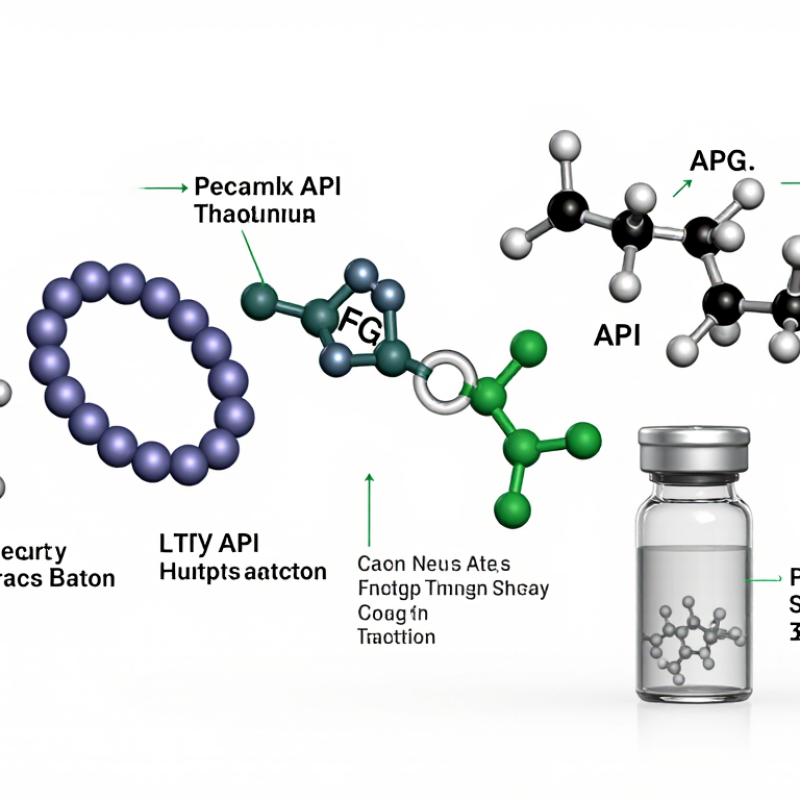
What Generic Peptide APIs Are and How They Are Classified
A generic peptide API is the active pharmaceutical ingredient used in a medicine after relevant patent or exclusivity protections have ended. It should match the reference ingredient in structure, biological activity, strength, and quality profile. The finished product may still contain different inactive ingredients. That distinction matters.
Generic peptide APIs can be classified by molecular structure. Short-chain peptides usually contain fewer amino acids and may have simpler analytical profiles. Longer or modified peptides can include cyclization, lipid attachments, or other controlled structural changes. These features affect solubility, stability, impurity patterns, and storage requirements. Small details matter here.
Another useful classification uses therapeutic purpose, such as metabolic, hormonal, or supportive treatment applications. Manufacturing route also provides a practical category. Some peptides are produced through chemical synthesis, while others require biological production and additional purification. Each route creates different risks, including incomplete reactions, aggregation, residual solvents, or microbial contamination.
In quality reviews, laboratories commonly examine identity, purity, potency, sterility where applicable, endotoxins, and related substances. Chromatography and mass spectrometry often support these checks. However, classification is not always tidy. A peptide may fit several categories at once. A structure-based label may help scientists, but it may not fully explain clinical or manufacturing behavior. Specifications must therefore be linked to validated methods, documented process controls, and current regulatory expectations. Mistakes can begin with an overly simple label.
Insulin and Insulin-Analog APIs for Diabetes Treatment
Insulin and insulin-analog APIs are among the most important generic peptide ingredients for diabetes treatment. These APIs require precise molecular structures, consistent biological activity, and strict control of impurities. Unlike many small-molecule ingredients, they depend on correct folding and stable three-dimensional behavior. Small process changes can affect potency, absorption, or injection-site tolerability. That risk deserves attention.
In practice, manufacturers monitor identity, purity, aggregation, charge variants, and microbial safety. Advanced methods may include chromatography, mass spectrometry, peptide mapping, and cell-based potency testing. Production also requires controlled temperatures and carefully validated storage conditions. A strong cold chain matters from manufacturing through distribution. It is not optional. Insulin-analog APIs may alter absorption speed or duration through carefully designed molecular changes. Therefore, developers must connect laboratory data with pharmacokinetic and clinical evidence. Analytical similarity alone does not prove equivalent treatment performance. A neat specification sheet can still hide practical weaknesses.
Reliable suppliers usually provide traceable batch records, change-control procedures, stability data, and clear impurity profiles. They should explain how fermentation, purification, refolding, and formulation steps are controlled. Regulatory expectations can differ across markets, so technical documentation must remain complete and current. Cost pressure is real, but reducing testing can create larger problems later. Even experienced teams can overlook container interactions or long-term aggregation. Continuous review is necessary. Generic peptide development is highly technical, yet patient needs remain the clearest measure of quality.
GLP-1, Somatostatin, and Related Metabolic Peptide APIs
What Are the Top Types of Generic Peptide APIs?
GLP-1 peptide APIs are central to current metabolic research and approved medicine development. They may support glucose control, appetite regulation, and weight-management programs. Quality depends on sequence accuracy, purity, potency, and impurity control. Small structural differences can change biological activity. That detail is often underestimated.
Somatostatin peptide APIs form another important group. They influence several endocrine pathways and require careful characterization. Related metabolic APIs may include glucose-dependent peptides, amylin-related compounds, and dual-pathway candidates. Reliable suppliers should provide batch-specific certificates, chromatographic data, mass spectrometry results, and stability information. Testing should also examine residual solvents, water content, microbial quality, and endotoxin levels when applicable. A polished document is not enough. Data must be traceable and consistent.
Tips: Define the intended use before comparing suppliers. Ask for current analytical methods, storage conditions, and retest dates. Review the manufacturing site, quality system, and regulatory documentation. Do not judge an API by purity alone. Potency, aggregation, and long-term stability matter too. Generic availability can vary by country and regulatory status. This point deserves more attention. Independent technical review is wise, especially when results seem unusually perfect.
Gonadotropin, Oxytocin, and Reproductive Health Peptide APIs
What Are the Top Types of Generic Peptide APIs?
Gonadotropin, Oxytocin, and Reproductive Health Peptide APIs
Generic peptide APIs support several reproductive health medicines, but their quality requirements differ significantly. Gonadotropin-related APIs, including follicle-stimulating and luteinizing hormone products, require careful evaluation of biological activity, molecular structure, and impurity profiles. These materials may be sensitive to temperature, moisture, and handling conditions. A reliable supplier should provide validated analytical data, batch-specific certificates, and clear storage guidance.
Oxytocin API is another important category. It is a short peptide used in regulated medical settings, where identity, potency, sterility, and endotoxin control deserve close attention. HPLC and mass spectrometry can help confirm composition, while biological assays may support potency assessment. Documentation matters here. Small inconsistencies can affect confidence in the final formulation.
Not every certificate tells the full story. A practical review should also examine GMP compliance, traceability, change-control procedures, and stability evidence. Regulatory expectations vary across regions, so market authorization and local requirements must be checked before procurement. Reproductive health APIs also demand responsible communication; laboratory specifications should never replace clinical judgment. Some test methods appear convincing but may not reflect real biological performance. That limitation deserves honest discussion. Qualified buyers often compare multiple batches, investigate unusual results, and request independent testing when the risk justifies it.
Key Quality, Manufacturing, and Regulatory Factors for Peptide APIs
What Are the Top Types of Generic Peptide APIs?
Generic peptide APIs may include therapeutic hormones, metabolic peptides, and other sequence-defined compounds. Their quality depends on more than a clean appearance. Identity testing should confirm the amino acid sequence, molecular mass, stereochemistry, and purity profile. A sharp HPLC peak helps, but it does not prove complete quality.
Manufacturing control is equally important. Solid-phase synthesis, cleavage, purification, and drying can each introduce risks. Residual solvents, truncated sequences, aggregation, endotoxins, and bioburden require documented testing. Reliable facilities use qualified equipment, validated methods, controlled environments, and traceable batch records. Scale-up can still expose weaknesses. A process that works in a small vessel may behave differently at commercial volume. This point deserves more attention than it often receives.
Regulatory expectations vary by market, but GMP compliance, stability data, impurity characterization, and consistent specifications remain central. The technical package should support every major claim with original records. Data integrity matters. It is not enough to provide polished certificates.
Tips: Ask for recent batch results, method details, storage conditions, and change-control history. Compare specifications with recognized pharmacopeial or regulatory expectations. Confirm that the supplier can explain unusual impurities, not merely hide them behind averages. No checklist is perfect. Independent review may reveal gaps that routine paperwork misses.


