China Top 10 Infant Diaper Suppliers for Global Buyers
China remains a significant manufacturing base for Infant Diapers, serving private-label retailers, distributors, and regional brands worldwide. Grand View Research estimates that the global baby diapers market was worth approximately USD 83.09 billion in 2023. Its report also projects continued growth through 2030, supported by urbanization, rising disposable incomes, and stronger hygiene awareness. However, market estimates differ by product definition and sales channel. Data can mislead.
This guide introduces ten China-based infant diaper suppliers for global buyers. The selection considers manufacturing experience, export capability, product range, quality systems, and evidence of international market service. Public information is incomplete, so a supplier’s website should not be treated as final proof. Buyers should request factory audit records, recent test reports, material specifications, and sample performance before placing large orders.
Practical checks matter. Examine the diaper’s absorbent core, SAP distribution, elastic recovery, waistband fit, and leakage protection. Ask whether the factory can maintain stable quality across different sizes and production runs. Reports from Euromonitor International and Mordor Intelligence indicate that premiumization and product differentiation are shaping the diaper sector. Yet cost remains decisive in many developing markets. A soft top sheet may impress during inspection, while weak sealing can fail during overnight use. Quality is not visible.
The suppliers discussed here may suit different purchasing goals, including OEM development, retail packaging, sustainable materials, and high-volume contract production. Certifications such as ISO 9001, FSC, or OEKO-TEX Standard 100 can support evaluation, but certification scope and validity must be verified independently. No ranking is permanent. Shipping distance, minimum order quantities, communication speed, and after-sales support can change the real supplier value significantly.
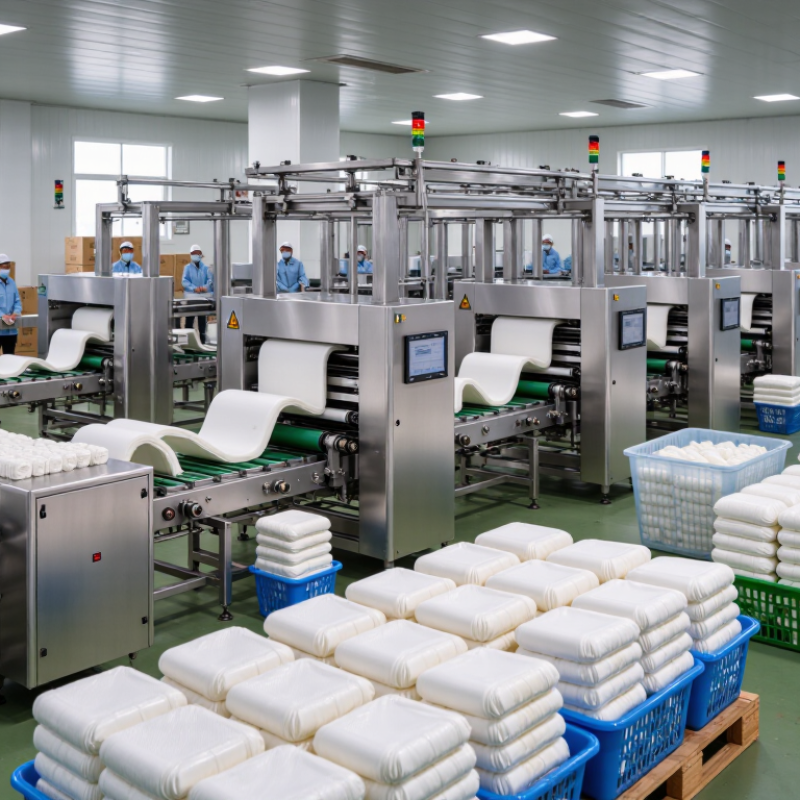
Market Criteria for Ranking China’s Infant Diaper Suppliers
Ranking China’s infant diaper suppliers requires more than comparing prices or factory photos. A reliable review starts with production experience, monthly capacity, and quality consistency. Buyers should request recent audit records, product samples, and batch-level inspection reports. Check whether the factory controls pulp, absorbent polymers, nonwoven fabric, and elastic components. Material traceability matters.
Performance should be measured with practical tests. Examine absorption speed, rewet levels, leakage resistance, softness, and waistband recovery. Test samples in different sizes, not just one attractive prototype.
Independent laboratory results add credibility, especially when claims involve skin contact or product safety. Certification documents should be current, verifiable, and matched to the actual production site. Paperwork alone is not enough.
Commercial criteria also influence the ranking. Consider minimum order quantities, lead times, packaging flexibility, and the supplier’s experience with overseas shipments. Clear communication reduces mistakes in sizing, labeling, and carton packing. A strong supplier explains limitations instead of promising everything. Visit the factory when possible, or arrange a live production review. No ranking is perfect. Sample quality may change during mass production, and even experienced buyers can overlook small process weaknesses. Regular inspections, retained samples, and written quality agreements provide a more dependable basis for long-term purchasing decisions.
China’s Infant Diaper Manufacturing and Export Landscape
China’s infant diaper manufacturing landscape combines large-scale production with flexible private-label services. Key manufacturing clusters operate across Guangdong, Fujian, Zhejiang, and Jiangsu. These regions offer access to nonwoven fabric, absorbent polymers, elastic materials, packaging, and converting equipment.
In factory assessments, production capacity is only one part of the picture. Buyers should inspect hygiene controls, warehouse conditions, operator training, and batch traceability. A reliable supplier can explain its absorbency tests, rewet results, size grading, and defect limits with clear records. Samples should be tested after storage, not only when they are fresh. Small details matter, such as sealed cartons, readable lot codes, and consistent adhesive lines.
Export work requires more than a competitive quotation. Suppliers should provide transparent lead times, packing specifications, product declarations, and documents matching the destination market. Port access can support efficient shipping, but congestion and raw material shortages may still affect schedules. Minimum order quantities also vary widely between standard products and customized designs. The picture is not always clean. Some factories present impressive showrooms but weak production records. Buyers need independent inspections and written quality agreements before placing large orders. A practical sourcing review should also examine payment terms, complaint handling, replacement procedures, and communication speed. These checks cannot remove every risk, but they make supplier decisions more evidence-based.
Top 10 Infant Diaper Suppliers in China for Global Buyers
China Top 10 Infant Diaper Suppliers in China for Global Buyers
China remains a major sourcing base for infant diapers, supported by mature converting equipment and extensive material networks. Grand View Research valued the global baby diapers market at approximately USD 83.5 billion in 2023. Its forecast also indicates continued growth through 2030. For global buyers, China’s top suppliers should be judged beyond factory size. Production consistency matters more.
Look for suppliers with documented monthly capacity, batch traceability, and export experience. Request recent test records for absorbency, rewet, leakage, tensile strength, and skin-contact materials. A practical factory audit should examine the fluff-pulp storage area, adhesive controls, packing lines, and finished-goods warehouse. Small details matter. For example, damaged carton corners can create moisture risks during ocean transport. ISO 9001 systems can support process control, but certification alone does not prove diaper performance.
Mordor Intelligence reports that Asia-Pacific remains a leading regional market for baby diapers, creating strong competition among Chinese manufacturers. This can benefit buyers through flexible minimum order quantities and private-label development. However, low quotations deserve careful review. The cheapest supplier may use thinner acquisition layers or provide incomplete compliance files. Ask for production samples from different lots, not only polished showroom samples. I would also verify laboratory reports independently, because paperwork can look complete while practical performance remains uneven. That weakness is easy to miss. Review payment terms, inspection rights, packaging artwork controls, and recall procedures before signing a long-term supply agreement.
Product Quality, Certifications, and Customization Capabilities
China’s leading infant diaper suppliers are often assessed by measurable quality, not attractive catalogs. Buyers should request absorbency, rewet, leakage, tensile-strength, and skin-contact test data. A practical sample check includes overnight use, waistband pressure, adhesive stability, and odor after storage. Small details matter.
Reliable suppliers usually maintain documented quality systems, batch traceability, and incoming-material inspections. Certifications may include ISO 9001, OEKO-TEX, FSC, or laboratory reports from independent testing bodies. However, certification scope and validity require careful verification. A certificate folder alone proves little. Ask for current documents, test methods, factory addresses, and matching product specifications. Requirements can also differ between target markets, so local compliance review remains essential.
Customization may cover diaper size, absorbent-core structure, elastic placement, fastening design, backsheet texture, printing, and retail packaging. Experienced factories can provide pilot samples before mass production. They should explain minimum order quantities, tooling costs, lead times, and acceptable tolerance ranges. I have found that early samples often look better than production batches. This is where buyers should request pre-shipment inspection, retained samples, and a signed quality agreement. Clear communication helps, but it does not replace repeated testing.
How Global Buyers Can Compare and Choose the Right Supplier
When comparing China’s top 10 infant diaper suppliers, global buyers should examine evidence, not polished catalogs. Request factory audit records, material specifications, production capacity, and recent export references. Check whether each supplier controls core processes or relies heavily on subcontractors. Ask for samples in newborn, medium, and larger sizes. Test absorbency, leakage resistance, softness, odor, and waistband recovery under controlled conditions.
Tips: Build a comparison sheet with price, minimum order quantity, lead time, packaging options, and response speed. Verify test reports with the issuing laboratory when possible. Confirm whether certifications match your target market’s requirements. A low quotation may hide higher inspection, tooling, or transport costs. Clarify payment terms before negotiation. Keep every promise in writing.
Supplier reliability also appears in small details. Do they answer technical questions clearly? Can they explain raw-material sources and quality checkpoints? Ask for a pilot order before committing to large volumes. Inspect carton strength, barcode accuracy, and batch consistency. These details affect warehouse handling and customer complaints. However, no scorecard is perfect. Even careful buyers can overvalue factory size or underestimate communication problems. Recheck critical claims through documents, samples, and independent inspections.


