Bankim Nagar, Siliguri, West Bengal
Choosing the top Sodium Selenite suppliers and manufacturers requires more than comparing quoted prices. This compound supports selenium fortification in animal nutrition, laboratory work, and selected industrial applications. Quality can vary between batches. A bright white powder is not enough evidence.
Recent guidance from the European Food Safety Authority evaluates selenium compounds as feed additives, emphasizing safety, authorized use, and controlled inclusion levels. The U.S. Geological Survey’s Mineral Commodity Summaries also identifies selenium as a recovered metal, commonly linked to copper refining. This supply background matters because production capacity may depend on upstream refinery output. Market reports from Grand View Research and Mordor Intelligence describe continued demand for selenium compounds in nutrition, agriculture, and specialty manufacturing. Their forecasts are useful, but they should not replace supplier verification.
Reliable manufacturers normally provide a current certificate of analysis, trace-metal results, assay data, and batch traceability. Buyers should also review GMP credentials, ISO 9001 systems, packaging controls, and export documentation. For feed applications, confirmation against applicable national additive registers is essential. For laboratory use, pharmacopeial or analytical-grade specifications may be more appropriate. Ask about moisture, particle size, solubility, and storage stability. Small details matter.
A practical supplier comparison should examine technical support, lead times, minimum order quantities, and recall procedures. Not every online listing represents a true manufacturer. Some are traders with limited control over production. That distinction is easy to miss. This guide therefore treats supplier reputation as evidence, not proof, and encourages independent testing before long-term purchasing decisions.
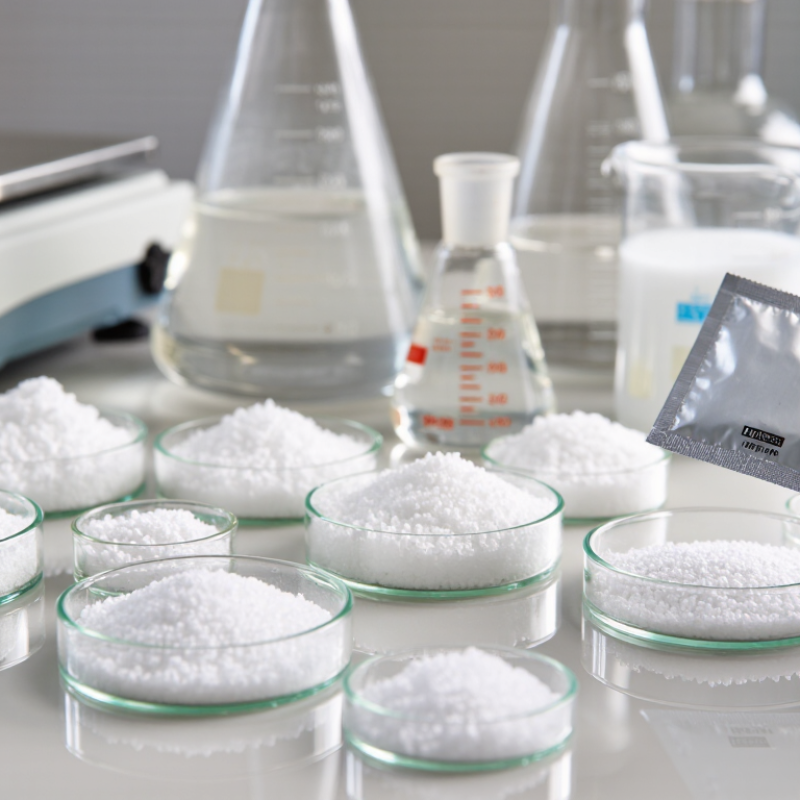
Top Sodium Selenite Suppliers and Manufacturers?
Sodium selenite is an inorganic selenium compound with the formula Na2SeO3. Its selenium remains in the +4 oxidation state. The anhydrous form has a molecular weight of 172.94, while the pentahydrate contains five water molecules. Both forms appear as white crystalline powders and dissolve in water. Handling still requires care because excessive selenium exposure can harm people and animals. OSHA and national chemical safety guidance recommend controlled dust exposure and suitable personal protection.
Industrial demand depends on purity and application. The USGS Mineral Commodity Summaries 2024 estimated global refined selenium production at about 3,500 metric tons in 2023. This supply supports glass production, animal nutrition, agricultural formulations, and selected chemical processes. In glass, selenium compounds help manage unwanted green tones and create red shades. Feed-grade sodium selenite is used in carefully measured premixes, where specification control matters. Suppliers should provide assay results, moisture data, trace-metal limits, particle-size information, and batch-specific certificates of analysis. ISO-based quality systems and feed or pharmaceutical manufacturing controls strengthen reliability. They do not replace independent testing.
Technical buyers often compare anhydrous and pentahydrate material incorrectly. That mistake changes the actual selenium concentration. A practical review should check elemental selenium content, packaging integrity, storage humidity, and transport conditions. The European Chemicals Agency identifies sodium selenite as requiring responsible classification and handling. Market reports may forecast strong growth, but their figures differ widely. Procurement decisions should therefore rely on verified batch data, not attractive projections alone. Some specifications remain unclear. That deserves a second review.
Sodium selenite is commonly supplied in anhydrous and pentahydrate forms. The chart compares their theoretical selenium content, calculated from the chemical formulas and standard atomic weights.
Anhydrous sodium selenite contains approximately 45.66% selenium by mass, while sodium selenite pentahydrate contains approximately 30.02% because five water molecules are incorporated into its crystal structure. Both forms are used in regulated applications such as animal nutrition, glass production, and selenium-related chemical manufacturing.
Sodium selenite suppliers usually serve several distinct markets. Nutraceutical and pharmaceutical-grade manufacturers focus on purity, traceability, and controlled production environments. Their documentation should include assay results, moisture levels, heavy metal testing, and batch identification. A clear certificate of analysis matters more than a polished sales brochure.
Feed-grade manufacturers produce material for carefully formulated animal nutrition products. They must demonstrate consistent selenium concentration and suitable packaging for dosage-sensitive applications. Industrial and laboratory suppliers often offer technical-grade material in smaller or larger quantities. Packaging may range from sealed bottles to lined drums, depending on handling needs.
Custom chemical manufacturers can provide tailored particle sizes, packaging formats, or contract production. However, “custom” does not always mean better. Buyers should examine production capacity, quality systems, storage conditions, and export documentation. ISO-based procedures, GMP experience, and independent testing can strengthen supplier reliability. Ask about contamination controls.
Sodium selenite requires disciplined handling. Suppliers should provide current safety data sheets and practical transport guidance. A supplier may answer quickly yet lack stable batch performance. That is worth questioning. Experienced purchasing teams compare several recent batches, not only one attractive sample. They also verify whether the manufacturer can maintain specifications during shortages, equipment changes, or seasonal demand.
Sodium selenite is usually produced from selenium dioxide, a refinery by-product, rather than mined as a finished compound. The USGS Mineral Commodity Summaries estimated global refined selenium production at roughly 3,500 metric tons in 2023. This limited supply makes process control important. Manufacturers commonly dissolve selenium dioxide in a controlled sodium hydroxide solution. The reaction forms sodium selenite, followed by filtration, evaporation, crystallization, and low-temperature drying.
Small details matter. Temperature changes can alter crystal size and moisture retention. Each batch should be checked for identity, assay, water content, insoluble matter, and trace metals. Laboratories often use ICP-OES or ICP-MS for selenium and impurity testing. X-ray diffraction can confirm the crystal phase. Appearance alone is not enough. White crystals may still contain unacceptable residues.
Quality systems should follow documented sampling plans, calibrated instruments, and full batch traceability. Food, feed, and pharmaceutical applications may require different specifications, so one certificate cannot fit every use. Relevant pharmacopeial or food-chemical monographs provide useful testing frameworks, while Codex and national authorities guide permitted applications. The 2023 EFSA scientific assessment also shows why dosage accuracy matters: selenium has a narrow margin between nutritional need and excessive exposure. I would still question any supplier offering unusually high purity without raw-material records, validated methods, and independent laboratory results. Real quality is demonstrated, not advertised.
| Data Dimension | Reference Information | Typical Production or Quality-Control Relevance | Verification Method or Documentation |
|---|---|---|---|
| Chemical identity | Sodium selenite | Inorganic selenium compound used in nutritional, laboratory, glass, pigment, and specialty chemical applications. | Product specification, certificate of analysis, and chemical identity testing. |
| Chemical formula | Na2SeO3 | The formula should match the declared anhydrous material or the stated hydrate form. | Stoichiometric review supported by elemental analysis and an identity test. |
| CAS Registry Number | 10102-18-8 | Commonly used identifier for sodium selenite. | Supplier documentation and regulatory database cross-check. |
| Molar mass | Approximately 172.94 g/mol for anhydrous Na2SeO3 | Useful for formulation calculations, assay conversion, and selenium-content calculations. | Calculation from the internationally accepted atomic weights of sodium, selenium, and oxygen. |
| Theoretical selenium content | Approximately 45.66% selenium by mass for anhydrous sodium selenite | Provides a theoretical reference; the actual value depends on assay, moisture, and hydrate content. | ICP-OES, ICP-MS, or another validated elemental selenium method. |
| Common raw materials | Elemental selenium or selenium dioxide, together with sodium hydroxide or sodium carbonate | Raw-material purity affects heavy-metal levels, oxidation state, color, and final assay. | Incoming-material inspection, supplier qualification, and raw-material certificates. |
| Common production route | Controlled oxidation and alkaline reaction to form soluble sodium selenite, followed by clarification, concentration, crystallization, drying, and sieving. | Process control is required to minimize unreacted selenium, excessive oxidation, insoluble matter, and batch-to-batch variation. | Batch records, process parameters, in-process sampling, and final release testing. |
| Reaction control | Reaction temperature, alkalinity, oxidation conditions, mixing, and residence time are controlled within validated operating ranges. | Improper control can lead to incomplete conversion or formation of unwanted selenium species. | Calibrated pH, temperature, flow, and time records; deviation and corrective-action reports. |
| Purification steps | Filtration or clarification removes insoluble particles; concentration and crystallization improve chemical purity; drying controls residual moisture. | Purification affects appearance, solubility, assay, insoluble matter, and storage stability. | Filter records, crystallization parameters, moisture analysis, and visual inspection. |
| Appearance | Typically a white to off-white crystalline powder. | Unexpected darkening, discoloration, or visible foreign matter may indicate contamination, oxidation-state changes, or poor storage. | Visual inspection under defined lighting and comparison with the approved reference standard. |
| Assay specification | Commercial grades commonly specify a high sodium selenite assay, often around 98% to 99% or higher, depending on grade and application. | The exact acceptance limit must be agreed in the purchase specification and linked to the intended use. | Validated titration, gravimetric analysis, ion chromatography, or elemental assay with a documented calculation basis. |
| Selenium content | Often specified separately from sodium selenite assay, particularly for nutritional or feed-related applications. | Separate selenium testing helps distinguish chemical purity from total elemental selenium concentration. | ICP-OES or ICP-MS with traceable calibration standards and suitable sample digestion. |
| Moisture or loss on drying | Limit is grade-specific because sodium selenite may be supplied in anhydrous or hydrated form. | Moisture influences assay calculations, powder flow, caking, and long-term stability. | Karl Fischer titration or validated loss-on-drying testing, with the reporting basis clearly stated. |
| Water solubility | Sodium selenite is generally soluble in water; the measured result depends on temperature, particle size, hydrate state, and test procedure. | Solubility consistency is important for premixes, solutions, laboratory preparations, and process use. | Standardized solubility or clarity test using controlled water quality, temperature, concentration, and equilibration time. |
| pH of aqueous solution | Usually assessed using a defined concentration, such as a 1% solution; the acceptable range is product-specific. | pH can reveal formulation differences, contamination, or incomplete neutralization. | Calibrated pH meter, specified concentration, controlled temperature, and documented test procedure. |
| Insoluble matter | Low insoluble matter is generally expected for high-purity grades. | High insoluble content may indicate inadequate filtration, raw-material contamination, or crystallization problems. | Filtration and gravimetric residue measurement using a defined sample mass and solvent volume. |
| Trace metals | Potential contaminants include lead, arsenic, cadmium, mercury, and other metals; limits depend on the application and applicable regulations. | Trace-metal control is especially important for food, feed, pharmaceutical, and laboratory grades. | ICP-MS or ICP-OES using validated digestion, blanks, calibration verification, and suitable detection limits. |
| Oxidation-state control | The declared product is selenium(IV) in the selenite anion, SeO32−. | Monitoring helps identify undesired conversion to other selenium species during production or storage. | Validated speciation method, redox testing, ion chromatography, or another qualified analytical technique. |
| Particle-size profile | Particle-size limits are normally defined by application rather than by a universal standard. | Particle size affects blending uniformity, dissolution rate, dust generation, and handling behavior. | Laser diffraction, sieve analysis, or another validated particle-size method. |
| Microbiological quality | For inorganic chemical grades, microbial limits may not be routinely required; they can be specified for certain nutritional or formulated applications. | Requirements should follow the intended use, customer specification, and applicable standard. | Risk-based microbiological testing where required, with documented sampling and laboratory controls. |
| Packaging | Commonly supplied in sealed, moisture-resistant inner packaging placed inside a rigid outer container or bag. | Packaging should protect the powder from moisture, contamination, leakage, and accidental exposure. | Packaging inspection, seal-integrity checks, label review, and packaging material specifications. |
| Storage conditions | Store tightly closed in a cool, dry, well-ventilated area away from incompatible materials and unauthorized access. | Good storage practice reduces moisture uptake, caking, contamination, and handling risk. | Warehouse temperature and humidity records, stock rotation, and periodic package-condition checks. |
| Batch traceability | Each batch should be linked to raw materials, processing records, test results, packaging, and release approval. | Traceability supports recalls, investigations, supplier evaluation, and consistent quality. | Batch number, manufacturing date, certificate of analysis, retained sample, and change-control records. |
| Supplier qualification criteria | Evaluate technical capability, consistent assay, trace-metal control, production capacity, documentation quality, and regulatory suitability. | Supplier ranking should be based on verified performance rather than price alone. | Quality questionnaire, sample approval, audit or remote assessment, certificates, and historical batch data. |
| Required commercial documents | Certificate of analysis, safety data sheet, specification sheet, lot information, packing list, and applicable regulatory declarations. | Complete documentation allows buyers to confirm identity, quality, safe handling, and intended-use compliance. | Document review against the purchase specification before shipment acceptance and batch release. |
Choosing a sodium selenite supplier requires more than comparing prices. Product consistency, documentation, and technical support should guide the decision.
Ask for a current certificate of analysis for every production lot. It should state assay, moisture, heavy metals, and relevant impurity limits. Check whether an independent laboratory verifies these results. A reliable supplier can explain testing methods without hiding behind vague terms. Good records matter.
Look for a quality system supported by recognized standards, such as GMP or ISO-based procedures. Review batch traceability, change-control records, complaint handling, and recall processes. Packaging should protect the material from moisture and contamination. Clear labeling should include lot numbers, net weight, storage conditions, and retest dates. Small details reveal larger habits.
Supplier audits can expose gaps that brochures never mention. Examine warehouse cleanliness, sampling procedures, and staff training. Ask how deviations are investigated. The answer should include evidence, not promises. Regulatory documents must match the intended application and destination market. Food, feed, laboratory, and industrial uses may require different specifications.
Price still matters, but unusually low pricing deserves careful questions. A strong supplier provides stable lead times and realistic minimum order quantities. Communication quality is also measurable. Slow replies may become expensive during a quality event.
One limitation remains. A single successful shipment proves little. Repeated performance builds confidence. Keep retain samples and compare future batches against approved specifications. Your evaluation may not be perfect, but it should be documented, reviewable, and willing to change when evidence changes.
Global sourcing of sodium selenite requires more than comparing quoted prices.
Define the required grade, assay, particle size, and packaging before contacting suppliers. Food, feed, pharmaceutical, and industrial applications may require different specifications. A clear product specification prevents costly misunderstandings.
Request a current certificate of analysis for every production lot. Check selenium content, moisture, heavy metals, and identification results. Independent laboratory testing can confirm critical values.
Supplier audits should examine batch records, hygiene controls, calibration, and traceability. Ask how deviations are investigated. Weak answers matter.
Documentation must match the shipment. Review safety data sheets, country-of-origin records, export documents, and applicable import requirements. Packaging should resist moisture and carry readable lot numbers.
For long-distance transport, inspect pallet stability and storage conditions. Sodium selenite is potent in small quantities, so accurate handling procedures are essential. Very small errors matter.
Evaluate supply continuity, not only the first delivery. Discuss lead times, minimum order quantities, backup production capacity, and communication during delays.
Payment terms and Incoterms also affect the real landed cost. A low offer may hide testing, customs, or repacking expenses.
I would still leave room for doubt: one successful sample does not prove consistent future quality. Retain samples and compare later lots against approved standards. Reliable sourcing grows through evidence, repeated checks, and honest conversations.
Hi! Simply click below and type your query.
Our experts will reply you very soon.
