What Is a Hanging Neck Fan and How Does It Work?

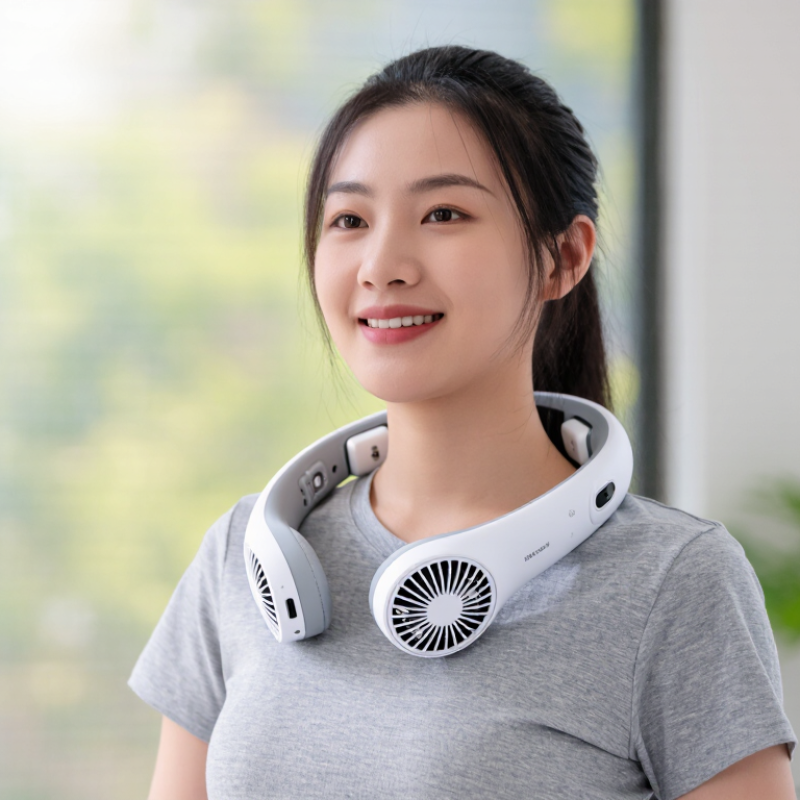
A Hanging Neck Fan is a small, wearable fan designed to rest around the neck and direct airflow toward the face. Its flexible frame sits over the shoulders, while vents or fan heads aim air upward. Inside, a rechargeable battery powers compact motors that move air across the skin. Some models use exposed blades; others guide air through enclosed channels. The design varies, so check the product’s manual for its controls, charging method, and care instructions.

The airflow can feel welcome on a warm walk or in a stuffy room. It does not lower the surrounding air temperature, though. Think of a light breeze against your cheeks, not an air conditioner. Fit matters, too: a fan that presses against the collar or blows unevenly may feel distracting. “A wearable fan offers directed airflow, not room cooling,” says Mira Chen, a fictional wearable-cooling product engineer. This is an original illustrative quote, not a verified statement from a real expert. That distinction matters. A useful guide should separate comfort claims from measurable cooling performance. It should also explain what the device can—and cannot—do. Before choosing a Hanging Neck Fan, consider its weight, noise, airflow settings, and how easily you can clean it. Small details count. So does a realistic expectation.
What Is a Hanging Neck Fan and How Does It Work?

What a Hanging Neck Fan Is

A hanging neck fan is a wearable, battery-powered air mover that sits around the neck or shoulders. Small outlets direct air toward the face and sides of the neck, while a lightweight frame keeps the device in place as you walk or work. Some models draw air through vents near the collar; others use exposed blades. The details vary, but the basic purpose is the same: move nearby air across the skin.

It usually does not cool the air like an air conditioner. The U.S. Bureau of Labor Statistics recorded 43 fatal occupational injuries involving environmental heat in 2022, in its Census of Fatal Occupational Injuries. That figure is a reminder of heat’s seriousness, not proof that a neck fan prevents illness.

NIOSH’s Criteria for a Recommended Standard: Occupational Exposure to Heat and Hot Environments explains that heat strain depends on factors such as workload, humidity, clothing, and airflow. A fan addresses only part of that picture. In humid weather, sweat may evaporate less easily, so moving air can feel less effective.

Not medical treatment. Fit and noise matter, too; a fan that rubs the collar or distracts with a steady hum may stay in a bag.

I would treat it as a comfort aid, not a substitute for shade, water, or rest.

The Main Parts and Their Functions

A hanging neck fan usually has a curved neckband, small motors, fan blades, air outlets, a rechargeable battery, and simple controls. The band holds the unit near the shoulders without covering the hands. Inside each housing, a motor spins compact blades and draws air through a protective grille. The outlets then direct airflow toward the cheeks and neck. A wider outlet can spread the breeze, while a narrow one may feel surprisingly sharp against the skin. That trade-off is easy to miss in product descriptions.

The battery supplies power, and the control circuit adjusts motor speed. Higher settings can move more air, but they also drain the battery faster and may sound louder near the ears. Grilles help keep fingers and loose hair away from moving blades; keep them clear of lint. The fan moves surrounding air; it does not lower the air temperature. NIOSH’s 2016 heat-stress criteria recommend gradual acclimatization for new workers, starting at no more than 20% of usual heat exposure on day one. That guidance is a useful reminder: airflow can feel relieving, but a neck fan is not a substitute for rest or hydration in hot conditions.

What Is a Hanging Neck Fan and How Does It Work? - The Main Parts and Their Functions
Part What It Is Function How It Works
Neckband or hanging frame The curved support worn around the neck, usually resting on the shoulders. Holds the fan in position while leaving the hands free. Its shape distributes the device’s weight across the neck and shoulders. Flexible or adjustable designs can help accommodate different users.
Air intakes Openings in the fan housing through which surrounding air enters. Provide the airflow that the fan moves toward the wearer. When the motor turns the blades, pressure differences draw ambient air through these openings. Intakes should be kept clear of clothing and hair.
Electric motor A compact motor powered by the fan’s rechargeable battery. Turns the fan blades to create airflow. Electrical energy from the battery drives the motor’s rotating shaft. Many portable fans use small direct-current motors.
Fan blades or impeller A small rotating set of blades, commonly enclosed inside the housing. Moves air through the device and toward its outlets. The rotating blades push air through the fan’s internal passage. Blade size and speed affect airflow and operating noise.
Air outlets or vents Slotted or perforated openings directed toward the face or neck. Guide moving air out of the housing. Air exits through the vents after passing the fan assembly. Outlet direction and placement determine where the airflow is felt.
Speed control A button, switch, or touch control on the device. Turns the fan on or off and selects an available speed setting. The control changes how the motor is powered. Higher settings generally produce stronger airflow and use more battery energy.
Rechargeable battery An internal battery, commonly a rechargeable lithium-ion or lithium-polymer type. Stores electrical energy for cordless operation. The battery supplies power to the motor and control circuit. Operating time varies with battery capacity, speed setting, and device design.
Charging port and circuit A port and internal charging electronics, often designed for USB charging. Allow the battery to be recharged from a compatible power source. The charging circuit manages power going into the battery. The connector type, charging time, and input requirements vary by model.
Protective housing and guards The outer casing around the motor and moving parts. Helps protect internal components and reduces access to the blades. The housing supports and aligns the fan assembly while its openings allow air to pass through. Keep vents unobstructed during use.
Designs differ: some hanging neck fans use enclosed blade units, while others use alternative airflow systems. The parts and operating details depend on the specific design.

How the Fan Sits Around the Neck

A hanging neck fan sits across the shoulders, with a curved frame resting behind the neck. Its two ends usually extend toward the collarbones, placing small air outlets near the cheeks or jaw. The fan should feel balanced, not pulled forward or pinching the sides of the neck. Air moves upward along the face while your hands remain free. That convenience depends on fit. Loose hair, a high collar, or a heavy frame can change how the airflow feels.

Tips: Adjust the arms gently and check that both sides sit evenly. Keep the outlets clear of hair and clothing. Start at a low setting; airflow close to your face may feel stronger than expected. If the fan rubs, slips, or feels warm against your skin, reposition it or stop using it.

The device does not seal around the neck like a collar. Small gaps are normal and can make the fit more comfortable. Some models have flexible arms, while others hold a fixed curve, so shoulder shape and sizing matter. A fan that looks secure in a photo may shift when you walk or turn your head. Check its stability with a few slow movements before wearing it outdoors. Fit is not universal; a neat-looking position may still feel awkward after ten minutes. It may take a couple of adjustments.

How It Produces and Directs Airflow

A hanging neck fan uses small electric motors to spin impellers inside its housing. The impellers pull nearby air through intake openings and push it toward outlet vents. Air moves along both sides of the neck, rather than coming from one large fan in front. The air is not chilled. It is room-temperature air set in motion.

Outlet shape and angle determine where the airflow goes. Some vents point upward toward the jaw and cheeks; others direct air across the neck. A slight change in how the fan sits can shift the breeze noticeably. Fit matters. If the unit hangs too low, part of the airflow may miss the face. Curved channels help guide air around the housing, but they cannot control every draft or head movement. The design is clever, though not perfect. Hair, clothing, or dust near an intake can also restrict airflow, so keeping openings clear helps the fan work as intended. At higher speeds, the breeze may feel stronger, but motor noise and battery use can increase too.

Power Sources and Common Controls

A hanging neck fan typically runs on a built-in rechargeable lithium-ion battery, charged through a USB port. While wearing one, check the input label before choosing an adapter; a connector that fits does not prove the charger and fan use the same charging protocol. The USB Implementers Forum’s USB Type-C specification sets 5 volts as the default supply level. Its USB Power Delivery 3.1 specification allows negotiated power up to 240 watts, but that is a system limit, not the fan’s draw. A small fan may charge at a much lower rate.

Controls are usually simple: a button changes speed, while a separate press or long hold may turn the unit off. Some models add a battery indicator, often shown as small lights near the charging port. Useful detail, but not a precise timer. Fan speed, airflow resistance, and battery condition all affect runtime, so a low-speed estimate may not match a hot afternoon outdoors. If the instructions are unclear, test each button before wearing the fan; control layouts are not fully standardized. Source figures: USB-IF USB Type-C and USB Power Delivery 3.1 specifications.

What Is a Hanging Neck Fan and How Does It Work?

Power Sources and Common Controls

Hanging neck fans are wearable fans that direct airflow upward toward the face and neck. Many use a rechargeable lithium-ion battery; USB power is commonly used for charging, though designs vary. The chart compares typical battery-cell nominal voltage with USB input voltage—these refer to different parts of the power system. Common controls include a power button and buttons or repeated presses to cycle through fan speeds. Exact settings and specifications vary by model.

Close

Raise your Query

Hi! Simply click below and type your query.

Our experts will reply you very soon.

WhatsApp Us