How to Choose Muscle Stimulator Pads in 2026?
Choosing Muscle Stimulator Pads in 2026 is less about finding the most expensive set and more about matching the pads to your device, skin, and intended use. A connector that does not fit, or an electrode that lifts at the edge, can make an otherwise promising session frustrating. Fit matters.
Grand View Research estimated the global electrical muscle stimulation market at about US$0.63 billion in 2023, with further growth projected through 2030. This is useful market context, not proof that every device or pad delivers the same results. Market estimates also depend on what products and regions a report includes. The U.S. Food and Drug Administration’s consumer guidance on electrical muscle stimulators offers a separate, safety-focused reference; it cautions readers not to treat marketing claims as a substitute for reliable evidence.
This guide will help you compare pad shape, size, connector type, material, and replacement cost. For example, a small round pad may suit a compact electrode placement, while a larger rectangular pad covers more skin. Check the manufacturer’s instructions before mixing brands or reusing worn electrodes. Adhesive that no longer holds evenly can create a poor contact, and dry or irritated skin deserves attention. Small details count.
There is no universal “best” pad. Personal comfort matters, but it can be difficult to judge from a product photo alone. The sections ahead focus on practical specifications, credible safety information, and limits worth acknowledging before you buy.
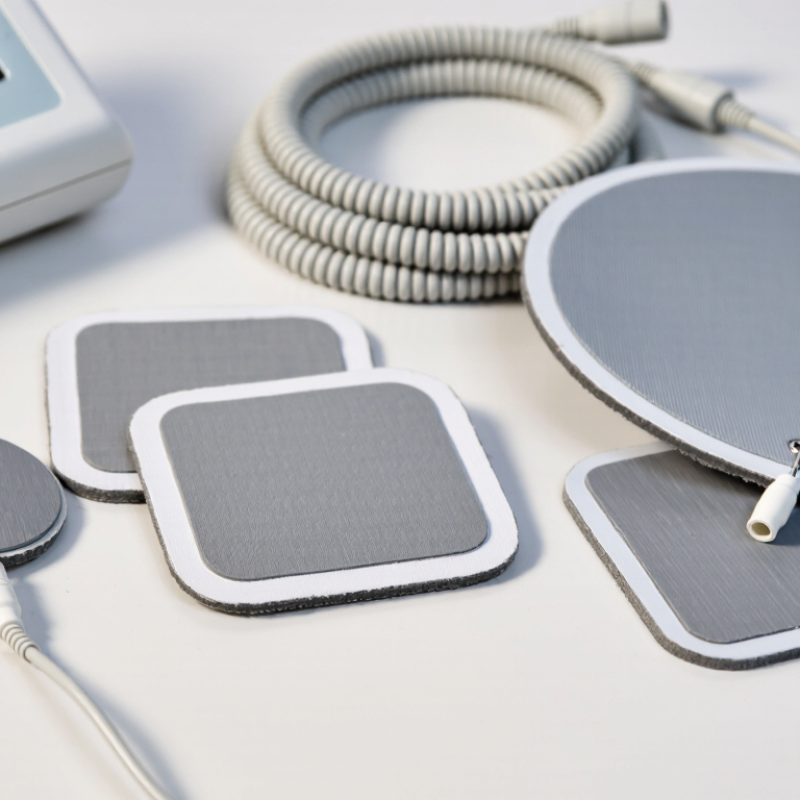
What Muscle Stimulator Pads Are and How They Work
Muscle stimulator pads are adhesive electrodes that deliver mild electrical pulses from a small control unit through the skin. With neuromuscular electrical stimulation, those pulses activate nearby motor nerves, prompting a muscle to contract and relax. The pads do not build strength by themselves; results depend on the program, placement, effort, and consistent use. A session may feel like firm tapping or tightening, not sharp pain. Stop if it hurts.
Pads vary in shape, size, connector, and conductive gel. Larger pads spread current over more skin; smaller ones can target a compact area, but placement still matters. When choosing replacements, match the connector and follow the device’s placement diagram rather than guessing from photos. Clean, dry skin helps pads stick; lotion and sweat can make them lift early. Good adhesion can still be fussy. Replace pads when they no longer sit flat or the sensation becomes inconsistent. Avoid irritated or broken skin, and check the device’s safety instructions. Ask a clinician before use if you have an implanted electrical device, a relevant medical condition, or questions about safe placement.
Which Pad Types and Shapes Fit Your Stimulator
Choosing pad shape starts with the stimulator’s connector and the treatment area. Check whether the lead uses snap or pin connections, then match the pad’s listed dimensions. Round pads suit compact areas, such as the forearm. Rectangular pads can cover longer muscle groups, while contoured pads may sit more securely around a shoulder or knee. Shape is not a treatment guarantee.
Reusable pads often use conductive gel and need careful cleaning and storage. Disposable hydrogel pads are convenient, but their adhesion can weaken as the gel dries. Fit matters. A 2022 systematic review, the meta-TENS study, examined 381 randomized trials involving 24,532 participants. It assessed TENS pain outcomes, not pad shapes, so its findings cannot establish that one shape works best. That distinction is easy to miss.
Before buying, compare the pad’s electrode area with the device manual, not just its appearance. A pad that is too large may not sit flat on a narrow muscle; one that is too small can feel sharply concentrated. Check replacement availability and whether the manufacturer specifies compatible pad materials. Keep skin clean and dry, and stop if you notice persistent irritation. I would not assume “universal fit” means reliable contact; connector details and pad dimensions still deserve a second look.
What Materials and Adhesive Features to Compare
When choosing muscle stimulator pads in 2026, compare the full contact surface, not just the sticker’s advertised lifespan. A conductive layer spreads current; a soft hydrogel layer helps maintain skin contact. Thin, dried gel can lift at the edges, especially on moving muscles. Check whether the pad is reusable, how it should be stored, and whether its connector fits your device. The World Health Organization’s 2022 Global Health Estimates report that about 1.71 billion people live with musculoskeletal conditions. That scale makes comfort and reliable contact practical concerns, not minor extras.
Adhesion should feel secure without requiring a hard pull to remove. Look for clear instructions on skin preparation, reuse, and replacement, and stop using a pad if it causes persistent irritation. For technical comparison, ask whether peel adhesion or shear performance was tested; ASTM D3330 and ASTM D3654 describe standard methods for evaluating pressure-sensitive tape. These are useful reference methods, though they do not by themselves prove that a finished electrode is suitable for every skin type. I still find that “stronger adhesive” sounds reassuring, but it can be the wrong choice for sensitive skin.
Tips: Store pads flat in their original sealed pouch, away from heat. Before a session, inspect the gel for cracks or dry patches. Small detail. A pad that looks intact may still have uneven contact, so replace it when stimulation feels inconsistent.
How to Choose Muscle Stimulator Pads in 2026?
Compare typical material trade-offs and check the product label for the adhesive type, intended reuse, and skin-contact instructions.
Scores are qualitative guidance, not standardized laboratory measurements. Actual performance varies by product, skin condition, and use.
How to Check Compatibility, Safety, and Replacement Needs
Before buying replacement muscle stimulator pads, check the device manual for the required connector, pad dimensions, and electrode type. A snap connector may look similar to a pin connector, but it will not necessarily fit. Compare the lead ends and pad shape in good light. This small check can prevent a poor connection or uneven stimulation.
Compatibility is only part of the decision. Use pads specified for your device, and place them only on clean, dry, intact skin. Do not use them over cuts, irritated areas, or numb skin. Follow the device instructions for placement and session length; stop if you feel burning, sharp pain, or persistent skin irritation. If you have an implanted electronic device or a medical condition that could affect stimulation, ask a qualified healthcare professional before use. This sounds fussy, and it is.
Check pads before each session. Replace them when edges curl, the gel looks dry or dirty, or adhesion becomes uneven. Weak contact can make sensation patchy, even when the device settings have not changed. Don’t try to restore worn gel with household liquids. Store pads on their liner in a sealed pouch, away from heat and dust. There is no universal replacement schedule; frequency depends on use, skin preparation, and storage. When in doubt, inspect the pad, then follow the device maker’s replacement guidance.


