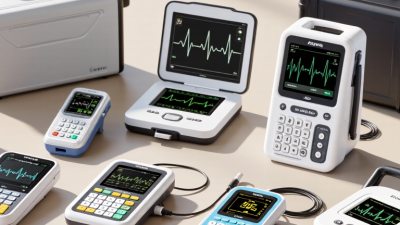
How to Choose the Best Portable ECG Monitor for Your Clinic

Choosing the best portable ECG monitor for your clinic starts with how your team actually works. A Portable Ecg device may be used in a crowded consultation room, at a bedside, or during outreach visits. It should capture reliable recordings without slowing patient flow. Clear controls matter when staff are moving between rooms. So does a screen that remains readable under bright clinic lighting.

Clinical needs should guide the comparison. Consider whether a single-lead or multi-lead device suits your intended assessments, and check recording quality, sampling specifications, battery life, and storage capacity. Look for clear manufacturer information about validation, compatible software, and data transfer. Confirm that the device fits your documentation workflow and that access to patient records is appropriately controlled. Small details matter. A cable that catches on a chair can disrupt an appointment; a confusing menu can lead to avoidable delays. Staff training and dependable technical support deserve attention too.

No portable monitor is best for every clinic. A lower-cost model may be adequate for limited use, while a busier service may need faster sharing and stronger workflow support. Compare specifications with your clinic’s protocols, and involve clinicians and technical staff before purchasing. Ask how the device performs in realistic conditions, not only in a product demonstration. I would not assume that extra features automatically improve care. That deserves a second look. The right choice supports consistent recordings and informed clinical review, but it does not replace professional interpretation or broader assessment.

How to Choose the Best Portable ECG Monitor for Your Clinic

Define Your Clinic’s Patient and Monitoring Requirements

Define the patients your clinic sees before comparing portable ECG monitors. A family practice may need quick rhythm checks during short visits, while a cardiology clinic may track symptoms that appear days later. Consider age, mobility, skin sensitivity, and whether patients can place electrodes without help. Small details matter. A patient with tremor, for example, may struggle to hold still during a recording.

Match the device to the clinical question. A brief rhythm check may call for a different lead configuration than extended monitoring for intermittent palpitations. Decide how long recordings should last, who will review them, and how results enter the medical record. Check that the display is readable under exam-room lighting and that staff can clean, charge, and prepare the unit between patients. These tasks sound mundane. They shape daily use.

Also define what the monitor cannot do. A portable ECG does not replace clinical assessment or urgent care when symptoms suggest an emergency. Confirm that staff understand recording limits, artifact, and escalation procedures. Test the workflow with representative patients before purchasing; a technically capable device can still be awkward in a busy clinic. Be willing to revise your assumptions after the trial. That part is often overlooked.

How to Choose the Best Portable ECG Monitor for Your Clinic

Define Your Clinic’s Patient and Monitoring Requirements

Typical ECG lead counts vary by workflow: spot checks may use a single lead, ambulatory Holter monitoring commonly uses 2–3 channels, rhythm monitoring often uses 3 leads, and a diagnostic resting ECG uses 12 leads. Confirm the device’s intended use and clinical requirements; lead count alone does not determine suitability.

Compare ECG Lead Configurations and Recording Capabilities

How to Choose the Best Portable ECG Monitor for Your Clinic
Compare ECG Lead Configurations and Recording Capabilities

Lead count should match the clinical question. A three-lead setup can support basic rhythm checks, while a 12-lead recording provides a broader view for clinical assessment. Some five-lead systems suit ongoing observation, but they do not replace a diagnostic 12-lead ECG. More leads are not automatically better. Consider who will use the monitor, where recordings will happen, and how quickly clinicians need to review them.

Recording features matter just as much. Check whether the device captures short, on-demand tracings, continuous rhythm data, or both. Review recording duration, storage capacity, battery life, and how files transfer into your clinic’s existing workflow. Clear patient labels and timestamps help prevent mix-ups. Ask how the monitor handles movement or poor electrode contact; noisy traces can limit interpretation. Local clinical protocols should guide device selection, and staff need training to place electrodes consistently. I would not assume that a longer recording is always more useful.

Tips: Test the monitor during a typical clinic day. Confirm that staff can save, retrieve, and review a sample tracing. Check electrode placement instructions before comparing lead options.

How to Choose the Best Portable ECG Monitor for Your Clinic - Compare ECG Lead Configurations and Recording Capabilities

Configuration Electrodes and leads Recording capabilities Typical clinical use Main limitations Best fit for a clinic
Single-lead ECG One recorded electrical view; electrode placement varies by device. Some handheld units use hand or finger contacts. Usually captures a short spot recording. Some models support repeated or extended recordings; duration and storage depend on the device. Quick rhythm checks and recording symptoms that occur intermittently. Provides limited views of cardiac electrical activity and is not a substitute for a standard diagnostic 12-lead ECG when that is indicated. Clinics prioritizing portability and fast, focused rhythm recordings.
Three-lead ECG Typically uses three electrodes to provide selected monitoring vectors. The exact lead views depend on electrode placement and device configuration. Commonly designed for continuous rhythm monitoring; review, alarm, and recording features vary by model. Rhythm and heart-rate observation during care or transport, where supported by the device. Offers fewer views than a diagnostic 12-lead ECG and may not provide the information needed for a full diagnostic assessment. Clinics that need portable, ongoing rhythm observation rather than a comprehensive ECG examination.
Six-lead ECG Typically records the six limb leads: I, II, III, aVR, aVL, and aVF. It does not include the six standard chest leads. Often intended for brief recordings; some devices offer longer capture or repeated recordings. Confirm recording duration, display, and export options for the specific model. Expanded rhythm assessment using multiple limb-lead views. Lacks the standard precordial (chest) leads, so it does not provide the complete set of views in a standard 12-lead ECG. Clinics seeking more lead views than a single-lead device in a compact format, while recognizing the diagnostic scope limits.
Twelve-lead ECG Standard configuration uses 10 electrodes to derive 12 leads: six limb leads and six chest (precordial) leads. Typically records a short, multi-lead tracing. Check whether the device records all leads simultaneously, supports rhythm strips, and saves or exports tracings. Standard diagnostic ECG acquisition when a full 12-lead tracing is clinically required. Requires more electrode placement than compact single-lead devices; portability, battery life, and workflow differ by unit. Clinics needing comprehensive, standard 12-lead recordings in a portable format.
Selection checks for any configuration Confirm the intended clinical use, recording duration, simultaneous versus sequential lead acquisition, display and review functions, data export and connectivity, battery life, electrode compatibility, cleaning requirements, and applicable regulatory clearance. Verify that the device and workflow meet local clinical requirements.

Note: Recording duration, storage, connectivity, and monitoring features vary by model. The descriptions above are typical configuration characteristics, not specifications for every device.

Evaluate Portability, Workflow, and Ease of Use

Portable ECG selection should begin with the room, not the product sheet. Can it move from triage to an exam room without unplugging half a cart? Check total carry weight, battery runtime, lead storage, screen visibility, and whether a complete 12-lead tracing can be captured near the patient. A compact unit is not portable if its electrodes, cables, and charger live elsewhere. Small matters. In a crowded clinic, one missing lead can turn a quick test into a room reset.

Workflow deserves equal scrutiny. The AMA’s 2022 digital health study found that 85% of physicians saw at least some advantage in using digital health tools. Yet adoption still depends on fit with daily work. Ask staff to record, save, review, and export a tracing during a real clinic session. Note extra taps, retries, and time spent locating the final file. Test it live. WHO projects a global shortfall of 10 million health workers by 2030, underscoring why avoidable steps matter, though the estimate spans many settings. Look for clear prompts, readable waveforms, quick patient entry, and export options compatible with your existing records. Do not assume the newest interface is easiest. A hands-on trial may reveal awkward cable routing or confusing labels that a polished demonstration hides.

Assess Data Management, Connectivity, and Compatibility

How to Choose the Best Portable ECG Monitor for Your Clinic

Assess Data Management, Connectivity, and Compatibility

A portable ECG monitor should fit the clinic’s daily workflow, not just produce a clear tracing. Check how it stores recordings, labels patient files, and handles timestamps. Can staff retrieve a study quickly? Small details matter. A crowded workroom is not the place to discover that files need manual renaming.

Connectivity should suit the rooms where clinicians actually work. Test wireless transfer from a treatment room, hallway, and area with weaker reception. Confirm whether the monitor can save recordings when the network drops, then upload them later without creating duplicates. No signal? That matters. Ask how access is controlled and whether data transfers are protected. Involve clinical IT staff before purchase; a successful demonstration on one laptop may not reflect the clinic’s network.

Compatibility deserves a hands-on check. Ask whether recordings can move into the clinic’s existing record system, and verify which file formats and data fields are supported. Test a sample ECG from capture through review, including patient identification and report retrieval. A technically compatible file may still require extra clicks or lose useful context. That is easy to overlook. Staff feedback may also change after several weeks of use, so leave room to reassess the workflow rather than treating the first trial as conclusive.

Verify Accuracy, Safety, and Regulatory Compliance

A portable ECG monitor should produce dependable traces in the rooms where your team actually works. Compare its readings with a validated reference system, and review performance across common heart rates and patient conditions. Ask how the device handles motion, loose electrodes, and electrical interference. These details can turn a clear tracing into a frustrating one. Small details matter. Check that staff can recognize signal-quality warnings and repeat a recording when needed.

Tips: Before purchase, test the monitor during a realistic clinic workflow. Review sample traces, battery life, electrode setup, cleaning instructions, and how results transfer into patient records. Ask staff what feels awkward; that feedback is easy to miss.

Safety and compliance need equal attention. Confirm that the device is authorized for its stated medical use in your jurisdiction, and verify applicable electrical safety and electromagnetic compatibility documentation. Requirements vary by location, so check with your regulatory or procurement lead rather than relying on a sales summary. Review labeling, instructions, maintenance needs, and any software or data-security documentation relevant to your clinic. Keep records of staff training and device checks. A checklist cannot catch every workflow mismatch, so revisit the setup after the monitor has been used with real patients.

Close

Raise your Query

Hi! Simply click below and type your query.

Our experts will reply you very soon.

WhatsApp Us