Bankim Nagar, Siliguri, West Bengal
- GST NO. : 19BHDPS7640K1ZR

7 Best Dental Implant Screwdrivers for Global Buyers
Dental implant treatment is expanding, but reliable instrumentation remains easy to underestimate. The World Health Organization reports that oral diseases affect nearly 3.5 billion people worldwide. As implant therapy becomes more accessible, clinics need tools that support accuracy, repeatability, and safe maintenance.
This guide reviews seven Dental Implant Screwdrivers for global buyers. The selection considers connection compatibility, torque control, handle ergonomics, sterilization resistance, and documentation. These details matter at the chairside. A driver that slips inside a narrow posterior implant connection can waste time and damage delicate components. A clear laser-etched size mark can prevent a surprisingly expensive mistake.
Market reports from Grand View Research and Fortune Business Insights forecast continued growth in the global dental implant sector. Their estimates differ because they use different regions, product categories, and forecasting methods. That difference deserves attention. Market numbers are useful signals, not absolute facts.
Dr. Carl E. Misch, a widely cited implant dentistry expert, wrote, “The final goal of implant dentistry is not the placement of implants, but the restoration of function and esthetics.” His principle also applies to instrumentation. The best screwdriver is not simply the most expensive model. It must match the implant system, torque protocol, clinical workflow, and local servicing conditions.
No shortlist is flawless. Some drivers offer excellent grip but limited modularity. Others provide broad compatibility but weaker traceability. Global buyers should verify manufacturer instructions, calibrated torque requirements, material specifications, and sterilization guidance before purchasing. A practical decision often begins with one question: will this tool remain dependable after repeated clinical use?
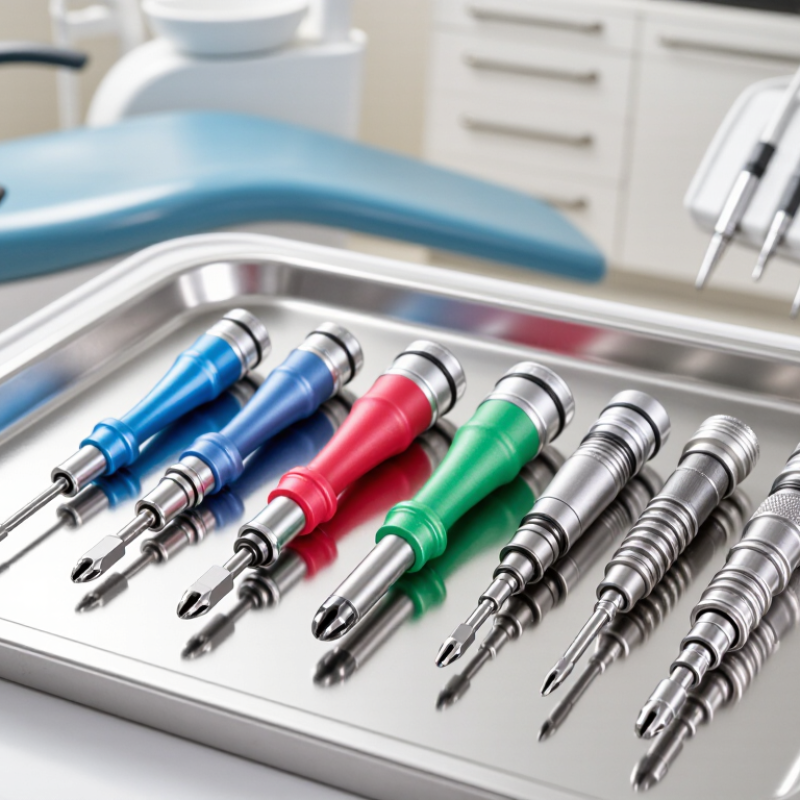
What Dental Implant Screwdrivers Are and Why They Matter
Dental implant screwdrivers are precision instruments used to place, tighten, or remove implant components during clinical procedures. Their main purpose is simple: transfer controlled force from the clinician’s hand to a small screw. A poor fit can damage the driver tip, deform the screw head, or leave a component inadequately tightened. Small errors matter.
The correct screwdriver must match the implant connection, screw design, length, and required torque range. Hex, star, and other interface patterns are not automatically interchangeable. A global buyer should check technical drawings, tolerance information, sterilization instructions, and torque recommendations before ordering. Product documentation should be clear and traceable. This is where experience helps; online photographs can hide important dimensional differences.
Material quality also affects daily reliability. Stainless steel or other medical-grade materials should resist corrosion and repeated sterilization when the manufacturer permits it. The handle should provide stable grip, even with gloves, while remaining easy to clean. Compatibility matters more than appearance. It is tempting to choose one universal driver, but universal claims deserve careful review. Some systems may fit loosely, especially after repeated use. Clinicians should verify engagement and torque with approved equipment, and replace visibly worn instruments. A practical purchasing mistake is ordering by implant name alone. The connection geometry must be confirmed.
7 Best Dental Implant Screwdrivers for Global Buyers - What Dental Implant Screwdrivers Are and Why They Matter
| Rank | Screwdriver Type | Typical Drive Interface | Main Clinical Use | Typical Working Length | Torque Compatibility | Key Advantage | Important Buying Check |
|---|---|---|---|---|---|---|---|
| 1 | Standard Internal-Hex Driver | Hexagonal driver tip; size varies by implant connection | Routine placement and removal of prosthetic screws with internal-hex connections | Approximately 5–25 mm | Manual use or compatible torque wrench; use the prosthetic screw manufacturer’s specified value | Widely used and easy to control | Confirm exact hex size, engagement depth, and connection geometry |
| 2 | Torque-Controlled Hex Driver | Hex driver tip mounted in a calibrated torque handle or ratchet | Final tightening of abutment, prosthetic, and restorative screws | Approximately 10–30 mm | Common dental torque ranges include approximately 10–35 N·cm, but the required value is connection-specific | Improves tightening consistency and reduces under- or over-torquing | Check calibration status, torque range, direction, and replacement-tip availability |
| 3 | Long-Shank Implant Driver | Usually hexagonal; available in several connection-specific profiles | Posterior restorations, deep access channels, and limited-mouth-opening cases | Approximately 20–40 mm | Manual or torque-wrench compatible when the shank is designed for the selected system | Reaches deep or difficult-to-access screw channels | Verify clearance, tip concentricity, rigidity, and resistance to excessive flexing |
| 4 | Short-Shank Implant Driver | Short hex or other connection-specific driver tip | Anterior restorations, restricted vertical space, and open surgical access | Approximately 5–15 mm | Compatible with selected manual handles or torque devices if the interface matches | Better access where a long driver would interfere with adjacent teeth or structures | Measure the required access depth before ordering |
| 5 | Ball-End Hex Driver | Rounded hex tip designed for limited angular access | Angled screw channels and restorations where straight-line access is difficult | Approximately 10–30 mm | Use only within the permitted angle and torque limits stated by the instrument manufacturer | Provides limited-angle access without requiring a perfectly straight approach | Do not use at excessive angulation or maximum torque unless specifically approved |
| 6 | Contra-Angle Machine Driver | Connection-specific driver mounted in a contra-angle handpiece | Implant placement or restorative procedures using a surgical or restorative motor | Approximately 10–25 mm | Motor-controlled torque must be set according to the implant and procedure instructions | Speeds up repetitive procedures and supports controlled mechanical insertion | Check handpiece compatibility, maximum speed, torque accuracy, and locking mechanism |
| 7 | Multi-Interface Driver Kit | Interchangeable tips for hexagonal, star-shaped, and other proprietary connections | Multi-system clinics, laboratories, distributors, and international service teams | Typically includes short, standard, and long tips | Torque capability depends on the handle, adapter, and individual driver tip | Broad system coverage with fewer separate instruments | Confirm exact connection profiles, tip retention, labeling, and replacement-part supply |
Note: Dental implant screwdriver dimensions, connection profiles, torque values, and sterilization limits vary by implant system and instrument design. Always verify compatibility and follow the applicable manufacturer’s instructions for use.

