2026 Best Vitamin K3 Powder Suppliers for Global Buyers?
Global buyers looking for Vitamin K3 Powder in 2026 need more than a low quotation. Product grades, assay methods, particle size, and packaging can vary between suppliers. A sample certificate may list purity, but buyers should also check the test method, batch number, and issue date. Details matter. Ask how the powder is packed, stored, and protected from moisture during transit. A sturdy lined container and clear lot markings are practical signs of process control, though they do not prove overall quality.
This guide explores suppliers through verifiable criteria, including product documentation, manufacturing transparency, traceability, communication, and export experience. Buyers should confirm that specifications match their intended application and that shipments meet the requirements of their destination market. Requirements can differ, so one supplier’s documents may not suit every purchase. A polished website is not proof of consistent production. Request current records, compare responses, and clarify who handles quality questions if a batch falls outside specification. No shortlist is perfect. Even a well-documented supplier can have limits in capacity, lead time, or service. The comparisons that follow are a starting point for due diligence, not a substitute for independent verification.
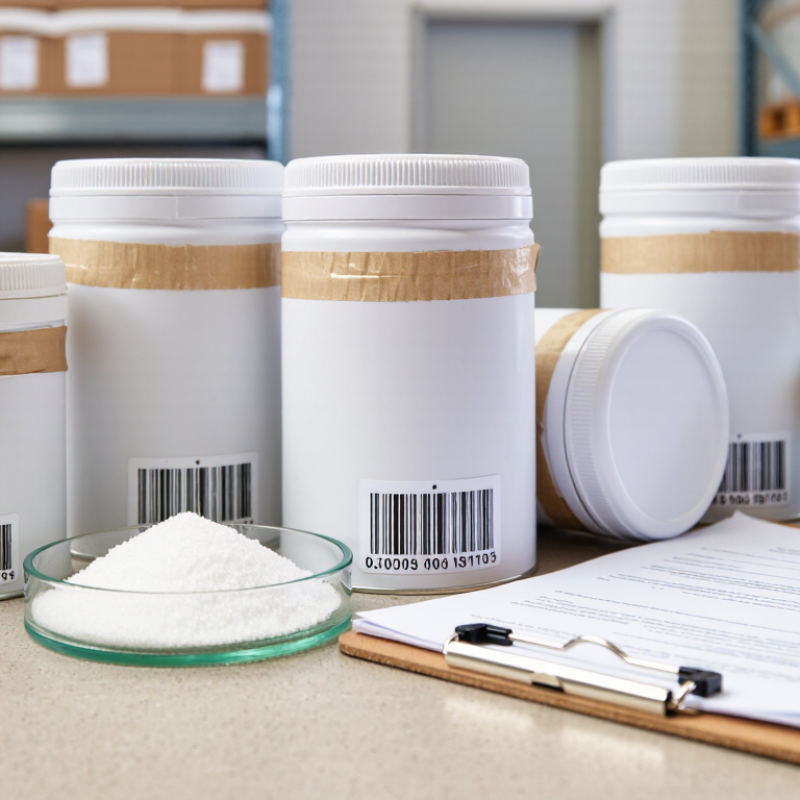
Define Vitamin K3: Compare the Three Feed-Grade Forms—MSB, MNB, and MPB
Vitamin K3 refers to menadione, a synthetic compound used in feed-grade vitamin products. Buyers commonly compare MSB, MNB, and MPB, but these names describe different menadione derivatives, not interchangeable labels. MSB means menadione sodium bisulfite. MNB is menadione nicotinamide bisulfite, while MPB is menadione pyrimidinol bisulfite. Their composition and physical handling differ, so the best choice depends on the feed formulation and processing conditions. Check the product specification rather than relying on the abbreviation alone.
In practice, review assay, moisture, solubility, carrier, and packaging details. A powder that pours smoothly in a sample jar may behave differently in a large batch. Ask for a recent certificate of analysis and confirm the declared form and concentration. Storage conditions matter, too. Heat and humidity can affect product quality. There is no single form that suits every feed operation; evaluating a small trial batch can expose handling issues before wider use.
Tips: Compare like with like. Confirm whether specifications report active menadione or total compound, and ask how the powder should be stored after opening. Keep records of batch numbers and test results. One detail is easy to miss: supplier documents may use different reporting bases, so clarify units before comparing prices.
2026 Best Vitamin K3 Powder Suppliers for Global Buyers? — Define Vitamin K3: Compare the Three Feed-Grade Forms—MSB, MNB, and MPB
Vitamin K3 is the common name for menadione, a synthetic vitamin K compound. Feed-grade products are generally supplied as menadione bisulfite derivatives. The comparison below describes the forms; it does not rank or endorse suppliers.
| Comparison point | MSB | MNB | MPB |
| Full name | Menadione sodium bisulfite | Menadione nicotinamide bisulfite | Menadione dimethylpyrimidinol bisulfite |
| What the abbreviation denotes | Menadione associated with sodium bisulfite | Menadione associated with nicotinamide and bisulfite | Menadione associated with dimethylpyrimidinol and bisulfite |
| Feed-grade role | A source of vitamin K activity for animal feed formulations | A source of vitamin K activity for animal feed formulations | A source of vitamin K activity for animal feed formulations |
| Form and handling considerations | Typically marketed as a powder; protect from moisture and follow the product specification for storage and handling. | Typically marketed as a powder; check the product specification for handling, storage, and compatibility requirements. | Typically marketed as a powder; check the product specification for handling, storage, and compatibility requirements. |
| How to compare product strength | Compare the guaranteed assay and declared menadione or vitamin K activity basis; do not assume equal percentages mean equal active content. | Compare the guaranteed assay and declared menadione or vitamin K activity basis; do not assume equal percentages mean equal active content. | Compare the guaranteed assay and declared menadione or vitamin K activity basis; do not assume equal percentages mean equal active content. |
| Key buyer checks | Request a current certificate of analysis, specification, safety data sheet, batch traceability, and packaging details. | Request a current certificate of analysis, specification, safety data sheet, batch traceability, and packaging details. | Request a current certificate of analysis, specification, safety data sheet, batch traceability, and packaging details. |
| Global sourcing note | Confirm that the product and its labeling meet the requirements of the destination market and intended feed use. | Confirm that the product and its labeling meet the requirements of the destination market and intended feed use. | Confirm that the product and its labeling meet the requirements of the destination market and intended feed use. |
Note: Assay, moisture limits, appearance, packaging, storage conditions, and regulatory status can vary by product and market. Verify current documentation with the supplier and relevant authorities before purchase or use.
Check Feed-Grade Assay Against GB/T 7294-2017 (≥96.0%)
2026 Best Vitamin K3 Powder Suppliers for Global Buyers?
Check Feed-Grade Assay Against GB/T 7294-2017 (≥96.0%)
For feed-grade vitamin K3 powder, treat the 96.0% assay threshold as a pass-or-review point, not a sales claim. Ask for the batch-specific certificate of analysis, test date, and stated assay basis. Confirm that the reported result is assessed against GB/T 7294-2017. A rounded “96%” alone tells you little about the batch or its testing. Small details matter.
The Alltech Agri-Food Outlook 2024 estimated global feed production at 1.29 billion metric tons in 2023. The OECD-FAO Agricultural Outlook 2024–2033 projects global meat consumption to rise about 12% by 2033 compared with its 2021–2023 base period. These figures underline why consistent ingredient checks matter across large feed supply chains. They do not, by themselves, prove a powder’s quality.
Compare the assay with other batch records, including moisture results and packaging details, and retain a sealed sample for follow-up testing. If a result sits close to 96.0%, ask the supplier to explain its test basis and measurement uncertainty. I would still review the full document trail; a clean-looking certificate can leave practical questions unanswered.
Use the NRC 0.5 mg/kg Broiler Vitamin K Requirement as a Formulation Benchmark
2026 Best Vitamin K3 Powder Suppliers for Global Buyers?
Use the NRC 0.5 mg/kg Broiler Vitamin K Requirement as a Formulation Benchmark
The National Research Council’s Nutrient Requirements of Poultry (1994) sets 0.5 mg vitamin K per kg of broiler diet as a formulation benchmark. Treat it as a reference point, not an automatic inclusion rate for every feed program. Bird age, ingredient composition, processing, and premix design can affect practical decisions. Small differences matter. A small weighing error in a concentrated premix can shift the final dietary level.
For global buyers evaluating vitamin K3 powder, ask suppliers for a current assay certificate, batch traceability, and storage guidance. Check whether the stated assay matches the product form and your formulation calculations. Alltech’s 2024 Agri-Food Outlook estimated global feed production at 1.29 billion metric tons in 2023, illustrating the scale of feed supply chains, though not broiler demand alone. That scale makes consistent documentation useful. Still, paperwork cannot prove how a powder handles in your own mixer; validate dispersion and batch uniformity under actual plant conditions. The NRC figure is useful, but it is dated, and treating it as a complete modern feeding specification would be too simple.
Audit Suppliers for GMP+, FAMI-QS, ISO 9001, and Batch Traceability
A reliable vitamin K3 powder supplier should offer more than a polished certificate folder. Ask whether GMP+ or FAMI-QS certification covers the actual manufacturing site and product category. Check the certificate’s validity, scope, and issuing body. ISO 9001 can indicate a documented quality management system, but it does not prove that every batch meets your specifications. That distinction matters.
Request a recent, lot-specific certificate of analysis and compare it with your purchase requirements. Review key identity and assay results, packaging details, and release dates. Batch traceability should connect the finished powder to production records and incoming materials. Ask the supplier to demonstrate how one lot can be traced through its records. A practical test is a mock recall. How quickly can they identify affected shipments? Paperwork can look tidy. The process may be less tidy.
For global purchasing, confirm that documents and product specifications suit the destination market and intended feed application. Keep supplier responses, audit notes, and approved specifications together. This creates a useful record when staff or shipments change. I would not treat a certificate as a substitute for an audit; remote reviews also leave gaps. Where possible, verify critical controls on site, including lot labeling, storage conditions, and how deviations are handled.
2026 Best Vitamin K3 Powder Suppliers for Global Buyers?
A practical audit framework for reviewing GMP+, FAMI-QS, ISO 9001, and batch traceability evidence.
The percentages are suggested review-time allocations, not certification requirements or supplier ratings. Verify certificate scope and validity directly with the issuer, and confirm that batch records connect raw materials, production, testing, and shipment documentation.
Compare 2026 Quotes by MOQ, Lead Time, Packaging, and Export Compliance
For 2026 purchasing, compare vitamin K3 powder quotes on the same specification. Ask each supplier to state the product grade, assay range, MOQ, and price breaks in writing. A low unit price may hide a large minimum order or extra testing fees. Check whether the quote includes a recent batch-specific certificate of analysis. Small details matter.
Lead times should distinguish sample dispatch, production, and delivery to your destination. Request realistic dates, not just a broad estimate. For packaging, compare net weight, sealed inner liners, outer drums or bags, and pallet details. Ask for handling and storage guidance suited to the product. Packaging photos can help, though they do not replace written specifications.
Export compliance needs destination-specific checking. Request available documents such as a certificate of analysis, safety data sheet, certificate of origin, and shipping documents. Confirm that product descriptions and customs details match across the paperwork. Requirements can differ by market and intended use, so verify them with a qualified local adviser or broker. Quotes are not perfectly comparable when suppliers use different terms; note the gaps before choosing. A neat spreadsheet helps. It will not catch everything.


