Bankim Nagar, Siliguri, West Bengal
Choosing the right Pulmonary Function Machine is a practical decision for hospitals, clinics, laboratories, and distributors worldwide. Each buyer faces different room sizes, patient groups, budgets, service networks, and reporting requirements. A compact spirometer may suit a busy primary-care clinic. A full pulmonary laboratory system may be necessary for diffusion testing, body plethysmography, or advanced bronchial challenge studies.
The market includes spirometers, portable pulmonary testers, desktop systems, body-box analyzers, diffusion-capacity machines, and integrated cardiopulmonary platforms. Performance can look impressive on a brochure. Real value appears beside the patient chair. Consider calibration routines, mouthpiece hygiene, software clarity, sensor stability, noise levels, and replacement-part access. Small details matter.
As pulmonary function expert Dr. Janet Stocks has emphasized, “Good lung function testing depends on both reliable equipment and well-trained staff.” That principle should guide every comparison. The most expensive model is not automatically the best choice. Neither is the cheapest. Sometimes, buyers overlook staff training and after-sales support. That mistake deserves attention.
This guide examines ten major Pulmonary Function Machine types for global buyers. It compares their clinical roles, strengths, limitations, maintenance needs, and typical purchasing environments. The rankings are useful, but not absolute. Local regulations, patient demographics, electrical standards, and technical support can change the decision. A machine that performs well in a university hospital may feel excessive in a rural clinic. Careful evaluation remains essential. The right choice should produce dependable measurements, comfortable testing, and practical results over many working years.
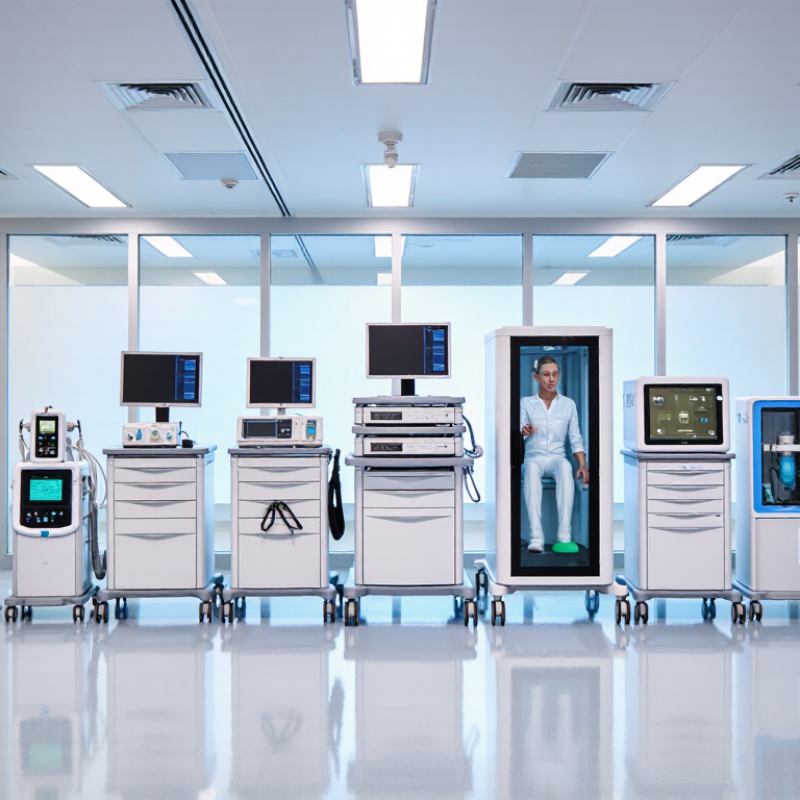
Pulmonary function testing measures how well the lungs move air and exchange gases. Its purpose is broader than confirming asthma or chronic obstructive disease. Clinicians also use it to assess unexplained breathlessness, monitor treatment, and evaluate surgical risk. The testing scope depends on the machine and clinical question. A spirometer records forced vital capacity (FVC), forced expiratory volume in one second (FEV1), and the FEV1/FVC ratio. These values help reveal airflow limitation. Peak expiratory flow can show effort and daily variation, but it should not stand alone.
More advanced pulmonary function machines measure lung volumes and gas transfer. Body plethysmography can estimate total lung capacity and residual volume, including air trapped after exhalation. Diffusing capacity testing, often called DLCO, evaluates how efficiently gas crosses the alveolar membrane. Exercise systems add oxygen saturation, heart rate, and ventilation data during controlled activity. Each measurement needs correct patient coaching. A weak seal or early exhalation can distort the result.
Reliable purchasing requires more than comparing screen size and test menus. Look for documented calibration procedures, quality-control functions, hygienic breathing circuits, and software that supports recognized testing standards. Staff training matters just as much. In real clinics, busy sessions and anxious patients can reduce test quality. Not every reading is clean. Reviewing flow-volume loops and repeating questionable maneuvers remains essential. Even experienced operators can miss small inconsistencies. Global buyers should also check local electrical requirements, service access, language settings, and data protection controls before selection.
Pulmonary function testing evaluates airflow, lung volumes, gas transfer, respiratory muscle strength, and airway resistance. The chart compares the number of core measurement families typically supported by each machine type.
Measurement coverage is based on the typical clinical capabilities of each device category. Actual configurations vary by system and accessories. Common core measurements include FVC, FEV1, FEV1/FVC, PEF, lung volumes, DLCO, airway resistance, respiratory muscle pressures, and exercise gas exchange.
Clinical need should guide pulmonary function equipment selection. Spirometers measure airflow for asthma and COPD screening. Portable spirometers support community clinics and follow-up visits. Full pulmonary function testing systems combine spirometry, lung volumes, and diffusion capacity. Body plethysmographs measure trapped gas and airway resistance, especially in complex obstruction. Diffusing-capacity analyzers assess gas transfer in emphysema and interstitial lung disease. The ATS/ERS 2019 technical statement stresses calibration, repeatability, and patient coaching.
Other applications require different systems. Impulse oscillometry evaluates respiratory resistance with tidal breathing, helping children or frail patients. FeNO analyzers support type-2 airway inflammation assessment in asthma management.
Cardiopulmonary exercise testing systems connect ventilation with oxygen uptake during exertion. Pediatric pulmonary function systems use smaller interfaces and age-adjusted reference equations. Ventilator and respiratory mechanics analyzers check pressure, flow, compliance, and resistance in critical-care settings.
The clinical burden is substantial. WHO reports that asthma affected about 262 million people and caused 455,000 deaths in 2019. COPD caused approximately 3.23 million deaths during the same year. These figures support wider testing access, but equipment alone cannot ensure accurate diagnosis. A portable spirometer may appear convenient, yet poor sealing can distort results. Buyers should verify local reference equations, infection-control procedures, staff training, and service support. The best machine is not always the most advanced one.
Top 10 Pulmonary Function Machine Types for Global Buyers
Key Features, Technologies, and Performance Differences
For global buyers, pulmonary function machines differ mainly by measurement technology. Volume-displacement spirometers measure lung volume directly. Pneumotachograph systems calculate airflow through pressure changes. Turbine devices use rotating blades, while ultrasonic models measure flow without moving parts. These designs influence resistance, calibration needs, cleaning, and durability. Low resistance helps patients breathe naturally. Easy calibration supports reliable daily testing. Small details matter.
The ten common types include volume-displacement spirometers, pneumotachographs, turbine spirometers, ultrasonic spirometers, portable handheld units, whole-body plethysmographs, diffusion-capacity systems, impulse oscillometry devices, metabolic carts, and cardiopulmonary exercise systems. Plethysmography measures trapped gas and airway resistance inside a sealed cabin. Diffusion systems assess gas transfer, often using controlled breath-hold procedures. Impulse oscillometry suits patients who struggle with forceful maneuvers. Exercise systems add oxygen uptake, carbon dioxide output, and workload data. They provide broader performance information, but testing becomes more demanding.
A buyer should compare sensor accuracy, flow range, software workflow, infection-control design, and service access. Check performance with different body sizes and breathing patterns. Portable units improve access, yet their screens and batteries may limit intensive clinical use. Advanced software can reduce manual work, but it cannot correct poor patient coaching. No device is perfect. Even stable sensors need verification gases, leak checks, and trained operators. I would request local validation data before purchase, because published specifications rarely reveal every practical weakness.
Hospitals, clinics, and diagnostic centers need different pulmonary function machine types. Selection should begin with clinical workload, not catalog rankings. A tertiary hospital may require full PFT systems, body plethysmography, DLCO testing, exercise testing, and pediatric modules. A small clinic may gain more from a calibrated spirometer or portable system. The WHO Asthma Fact Sheet reports that 262 million people had asthma in 2019. COPD caused 3.23 million deaths that year. Demand is substantial, but utilization still varies by region.
Check the test menu first. Spirometry should support pre- and post-bronchodilator testing, acceptable maneuvers, repeatability checks, and clear flow-volume loops. The GOLD 2025 Report identifies a post-bronchodilator FEV1/FVC below 0.70 as required evidence for confirming COPD. For unexplained dyspnea, DLCO and lung-volume measurement may matter more than extra software. Impulse oscillometry can support assessment when patients cannot perform forceful maneuvers. Children need low-dead-space interfaces and age-appropriate reference equations. Small details matter.
Procurement teams should verify calibration routines, infection-control surfaces, disposable costs, service response, and data interoperability. ATS/ERS 2019 technical standards emphasize equipment accuracy, quality control, and operator competence. Confirm local electrical requirements and regulatory registration. Ask for raw-data export, audit trails, and reference-value updates. Real-world evaluations often expose fragile touchscreens and incomplete staff training. That weakness is easy to underestimate. A lower-cost device may become expensive through downtime, repeated tests, and unreadable reports.
| No. | Pulmonary Function Machine Type | Primary Measurements | Typical Clinical Applications | Key Technical Characteristics | Portability and Workflow | Recommended Facility | Essential Selection Criteria |
|---|---|---|---|---|---|---|---|
| 1 | Diagnostic Spirometer | FVC, FEV1, FEV1/FVC, PEF, FEF25–75%, FET and flow-volume loops | Initial assessment of obstructive and restrictive ventilatory patterns, asthma monitoring, COPD evaluation and pre-operative screening | Volume- and flow-based testing; requires acceptability and repeatability checks; commonly supports predicted-value reference equations and bronchodilator testing | Desktop or compact cart-based format; moderate operator training; disposable or reusable patient interfaces may be available | Hospitals, respiratory clinics, primary-care clinics and occupational-health centers | Verify accuracy across the intended flow range, quality-control functions, infection-control design, software reporting, calibration procedure and local regulatory compliance |
| 2 | Desktop Spirometry System with Computer Software | Standard spirometry indices, real-time curves, predicted values, z-scores and lower-limit-of-normal calculations | High-volume outpatient testing, longitudinal follow-up, occupational surveillance and electronic medical-record documentation | External display or computer connection; data storage, searchable patient records, printable reports and optional network integration | Fixed workstation; efficient for repeated daily testing; usually needs a stable power supply and a dedicated testing area | Diagnostic centers, pulmonary departments and multi-site hospital networks | Assess software usability, data export formats, audit trails, user permissions, network security, multilingual support and compatibility with existing information systems |
| 3 | Portable Handheld Spirometer | Core spirometry values including FEV1, FVC, FEV1/FVC, PEF and selected forced expiratory flow parameters | Community screening, bedside assessment, rural outreach, occupational testing, home visits and follow-up monitoring | Battery operation; compact flow sensor; digital screen or mobile-device connection; reduced footprint compared with laboratory systems | Highly portable; rapid setup; may use disposable flow sensors or bacterial-viral filters to support infection prevention | Mobile medical teams, small clinics, primary-care facilities and home-care services | Confirm battery endurance, sensor replacement cost, drop resistance, screen readability, wireless reliability, automated quality grading and offline data capability |
| 4 | Full Pulmonary Function Testing System | Spirometry, lung volumes, diffusion capacity and, depending on configuration, airway resistance and bronchodilator response | Comprehensive diagnosis of obstructive, restrictive and gas-transfer disorders; specialist respiratory assessment | Modular laboratory platform; may combine multiple measurement technologies and require controlled test procedures and trained personnel | Stationary; larger room and higher installation requirements; supports advanced diagnostic workflow | Tertiary hospitals, university hospitals and specialized pulmonary laboratories | Evaluate module compatibility, measurement accuracy, reference equations, calibration requirements, service coverage, room utilities, training and future expansion options |
| 5 | Body Plethysmography System | Thoracic gas volume, residual volume, total lung capacity, airway resistance, specific airway resistance and spirometry | Detection of air trapping and hyperinflation, confirmation of restriction, complex obstructive disease assessment and pre-operative evaluation | Sealed cabin measures pressure and volume changes during specific breathing maneuvers; provides lung-volume data not obtainable from simple spirometry alone | Stationary and space-intensive; requires environmental control, regular calibration and highly trained operators | Advanced pulmonary laboratories and referral hospitals | Check cabin dimensions, patient weight range, pressure-sensor stability, emergency access, calibration workflow, accessibility and availability of technical maintenance |
| 6 | Diffusing Capacity Testing System | DLCO, alveolar volume, transfer coefficient and supporting spirometry parameters | Evaluation of gas-transfer impairment in interstitial lung disease, emphysema, pulmonary vascular disease and unexplained breathlessness | Commonly uses a single-breath gas-transfer maneuver; requires controlled test gases, gas analysis and correction factors such as hemoglobin when clinically indicated | Stationary or laboratory-based; gas-cylinder or gas-supply management may be required; testing needs careful patient coaching | Pulmonary laboratories, oncology centers, cardiopulmonary units and tertiary hospitals | Review gas consumption, analyzer stability, calibration frequency, cylinder safety, environmental compensation, reporting options and compliance with applicable testing standards |
| 7 | Impulse Oscillometry or Respiratory Oscillation System | Respiratory resistance and reactance across multiple frequencies, including parameters associated with small-airway function | Assessment of patients who cannot perform reliable forced maneuvers, pediatric respiratory evaluation, asthma research and complementary small-airway assessment | Measures respiratory mechanics during quiet tidal breathing; generally requires less patient effort than conventional forced spirometry | Compact desktop format; relatively fast testing; still requires proper mouth seal, cheek support and standardized patient positioning | Pediatric hospitals, asthma clinics, research centers and specialized diagnostic facilities | Confirm frequency range, reference data, artifact detection, tidal-breathing quality controls, age suitability, disposable interfaces and clinician training requirements |
| 8 | Metabolic Cardiopulmonary Exercise Testing System | Oxygen uptake, carbon dioxide output, minute ventilation, respiratory exchange ratio, ventilatory equivalents and exercise heart-rate data | Exercise intolerance assessment, cardiopulmonary limitation analysis, pre-operative risk assessment, rehabilitation and athletic evaluation | Integrates breath-by-breath gas analysis with a cycle ergometer or treadmill and cardiac monitoring; requires graded exercise protocols | Stationary laboratory system; higher staffing, emergency preparedness and maintenance requirements than routine spirometry | Cardiology departments, pulmonary laboratories, rehabilitation centers and sports-medicine facilities | Assess gas-analyzer response time, calibration gases, exercise hardware, ECG integration, emergency equipment, software protocols, operator qualifications and patient safety procedures |
| 9 | Peak Expiratory Flow Meter | Peak expiratory flow, usually expressed in liters per minute | Personal asthma action plans, short-term monitoring of expiratory flow and simple serial measurements | Simple mechanical or electronic measurement; does not replace complete spirometry and provides limited information about lung function | Low-cost, handheld and easy to distribute; minimal setup and maintenance; best suited to repeated patient self-measurement | Primary-care clinics, pharmacies, schools, asthma programs and home monitoring | Choose a clear scale or display, suitable measurement range, repeatable resistance characteristics, easy cleaning or disposable mouthpieces and clear patient instructions |
| 10 | Portable Ventilation and Respiratory Muscle Assessment System | Maximum inspiratory pressure, maximum expiratory pressure, vital capacity, respiratory rate and selected ventilatory parameters | Respiratory muscle weakness assessment, neuromuscular disease follow-up, weaning evaluation and respiratory rehabilitation | Combines pressure-based respiratory muscle tests with selected volume or flow measurements; results depend strongly on patient effort and standardized coaching | Portable or compact desktop format; suitable for bedside use but requires trained supervision and repeatable test technique | Intensive-care units, neurology departments, rehabilitation centers and respiratory clinics | Verify pressure range, measurement resolution, leak detection, occlusion-test safety, mouthpiece options, calibration method, patient data storage and cleaning procedures |
Note: Available measurements, operating ranges, reference equations and quality-control features vary by configuration. Buyers should verify local regulatory requirements, applicable international testing standards, service availability, consumable supply and staff training before procurement.
Global buyers should compare more than the purchase price. The ten main types include spirometers, portable spirometers, desktop systems, full PFT systems, body plethysmographs, DLCO units, metabolic testing systems, peak flow meters, impulse oscillometry devices, and pediatric platforms. Each serves a different clinical setting. A small clinic may value portability, while a respiratory laboratory needs stable calibration and wider testing capacity.
Standards should guide the shortlist. The ATS/ERS 2019 spirometry standard emphasizes quality control, repeatability, operator training, and verification procedures. ISO 26782 also addresses spirometry equipment performance. These details affect results, maintenance, and patient trust. WHO reported 3.23 million COPD deaths globally in 2019, showing why dependable respiratory testing remains important (WHO Global Health Estimates, 2023).
Support can determine the real ownership cost. Buyers should request installation training, remote troubleshooting, spare-part availability, software updates, and local service response times. A two-year warranty sounds useful. It may not cover sensors, calibration syringes, batteries, or annual servicing. Compare five-year costs, including consumables, staff training, downtime, and calibration visits. I have seen procurement teams overlook workflow time. That mistake becomes expensive. Reports often present market growth, but they rarely measure failed tests or delayed repairs. Buyers should demand local references and documented service records before approving a technically attractive system.
Hi! Simply click below and type your query.
Our experts will reply you very soon.